
Architects, structural engineers, MEP engineers and contractors are increasingly outsourcing Revit work to outside specialists to clear backlogs, reduce overhead, and keep construction schedules on track. This guide covers what the service includes, what it costs, and how to choose the right outsourcing partner.
What Is Revit BIM Outsourcing?
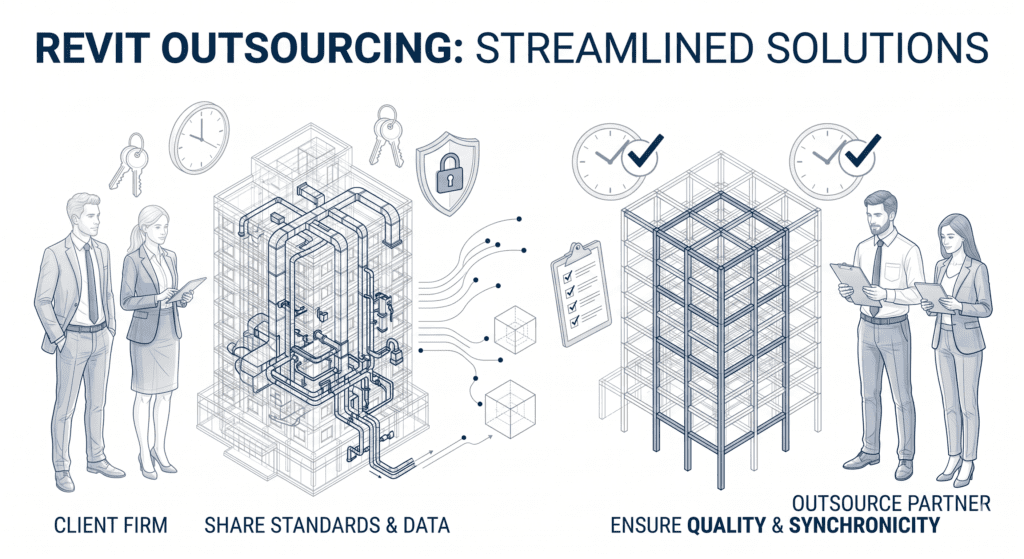
Revit BIM outsourcing means assigning Revit modeling tasks to an external team rather than expanding headcount internally. Firms send over project files, reference drawings, and scope documents – and the provider delivers models, drawings, or coordination packages that slot directly into the project workflow.
The scope can be a single deliverable or a long-term arrangement covering the entire project lifecycle. Either way, ownership of all outputs stays with the client.
What Revit Modeling Services Actually Include?
Revit modeling services vary by discipline and project type. Most providers offer:
- Architectural modeling – 3D models, floor plans, elevations, sections and documentation for architects and interior design teams.
- Structural services – framing models, foundation drawings and structural documentation for structural engineers and construction managers.
- MEP systems – mechanical, electrical and plumbing systems modeled for coordination and clash detection.
- Revit Family creation – custom components tailored to project needs.
- Point Cloud to Revit – scan to BIM for renovation and as-built projects.
- Shop drawings – construction-ready drawings extracted from the model.
- Quantity Takeoffs – material quantities extracted directly from Revit models.
Outsourcing these Revit services to dedicated teams is a smart move for firms managing multiple builds, helping to keep the project lifecycle moving without overloading core staff. In many cases, companies rely on specialized partners such as teams offering BIM outsourcing services to handle everything from modeling to documentation at scale.
The Real Benefits of Outsourcing Revit Services
The most immediate benefit is cost control. Maintaining an internal Revit team – salaries, software licences, hardware – creates fixed costs regardless of project volume. Outsourcing converts those into variable costs tied to actual work.Other practical benefits include:
- Save time on delivery – dedicated teams can turn work around quickly when internal capacity is stretched
- Specialized expertise – providers focused on BIM services and Revit 3D modelling build models consistently to a high standard
- Scalability – scale up for large projects, scale down between them, without hiring cycles
- Seamless collaboration – cloud platforms and shared project files allow overseas clients and local firms to coordinate without friction
To get a broader view of why architectural firms make this call see why architecture and engineering teams outsource drafting work .
Revit Outsourcing vs an In-House Team
| Factor | Outsourcing | In-House |
| Cost | Variable – per project or hourly | Fixed – salaries, benefits, software |
| Speed | Fast onboarding, quick turnarounds | Hiring and ramp-up time |
| Expertise | Specialists in Revit BIM services | Depends on individual hires |
| Control | Requires clear briefs and oversight | Direct daily supervision |
| Scalability | Easy to adjust per project | Bound by headcount |
| Cultural fit | Requires active management | Easier to build over time |
For project-based work, outsourcing wins on flexibility and cost. For firms needing constant design development and daily design intent discussions, a hybrid model often makes more sense.
Revit Outsourcing Cost per Hour – What to Expect?
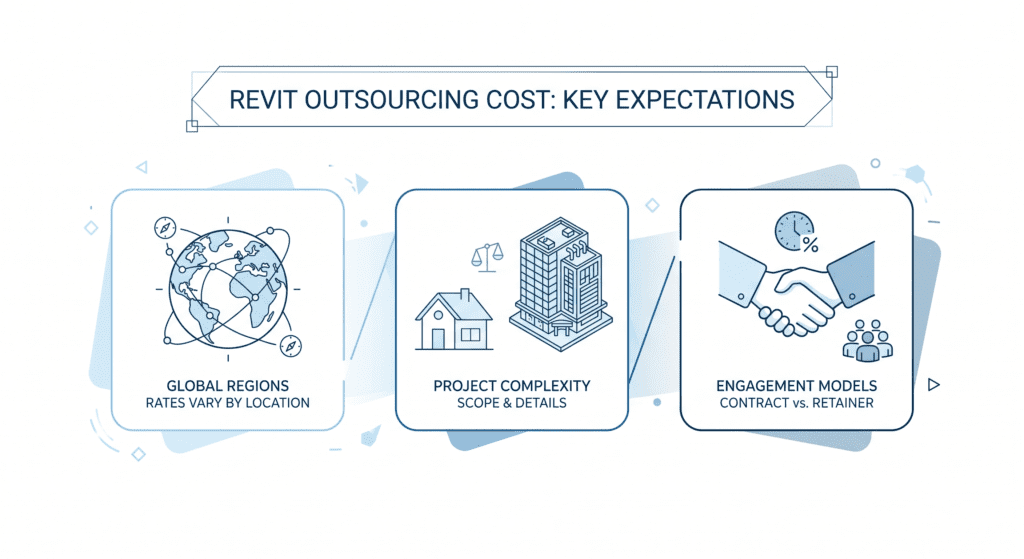
Hourly rates depend on geography, discipline, and engagement type:
- Eastern Europe / South Asia: $15 – $40/hr for standard Revit modeling
- Southeast Asia: $20 – $50/hr
- US / UK / Canada-based providers: $65 – $120/hr and above
Most providers also offer fixed-fee project pricing or retainers for ongoing work. Retainers with dedicated teams typically reduce the effective rate while maintaining quality assurance on the client’s terms.
A straightforward residential 3D modeling job costs less than a multi-discipline MEP coordination package requiring multiple clash detection cycles, model revisions, and shop drawing sets.
How to Manage an Outsourced Revit Project?
Most project problems trace back to unclear scope or delayed feedback – not technical skill gaps. Structured approach avoids both:
- Define scope and design intent upfront – share all drawings, specs and references before work starts.
- Set key milestones – break delivery into review stages so issues surface early not at final handover.
- Use shared platforms – tools like Autodesk BIM 360 keeps project files in sync across teams. For an overview of how that works in practice, see what Autodesk BIM 360 is.
- Assign a single point of contact on each side – clear communication prevents instructions getting lost.
- Make sure models are accurately represented at each stage – open the file, check the geometry, confirm it matches the brief.
- Keep a change log – documented decisions protect the project’s success and remove ambiguity later.
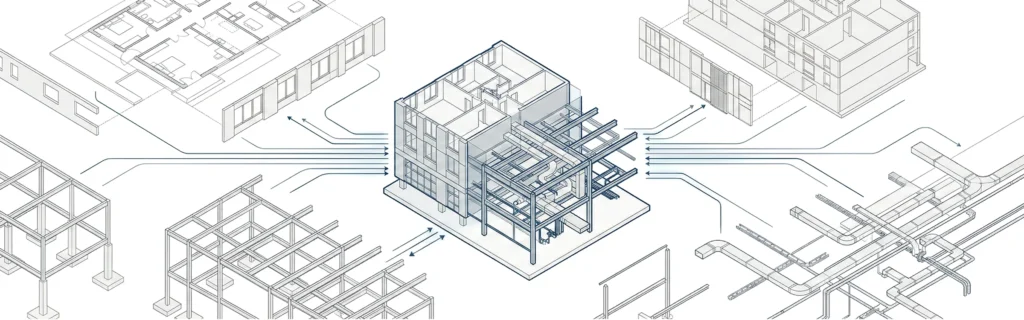
For a deeper understanding of how coordination actually works in practice, it’s worth looking at how BIM coordination brings architecture, structure, and MEP together into a single workflow.
Typical Problems with Revit Outsourcing and How to Avoid Them?
- Quality gaps – models that look complete but do not meet industry standards. Fix: Share your quality standards and BIM execution plan beforehand; include quality assurance checks in your contract.
- Data security – project files contain sensitive design data. Fix: ask for non-disclosure agreements before sharing anything and ask how the partner handles intellectual property.
- Time zone friction – asynchronous communication can cause delays of days. Fix: agree on overlapping hours and response times at the outset.
- Scope creep – the proposal gets bigger but the budget doesn’t. Fix: lock the scope in writing and have a change order process for anything outside of it.
- Software version mismatch – Different Revit versions can cause problems. Solution: Check software versions compatibility before sharing files.
These challenges are also common in wider drafting and modeling workflows, which is why many firms evaluate whether outsourcing drafting work is more efficient than keeping everything in-house.
How to Find the Right Outsourcing Partner for Revit and BIM?
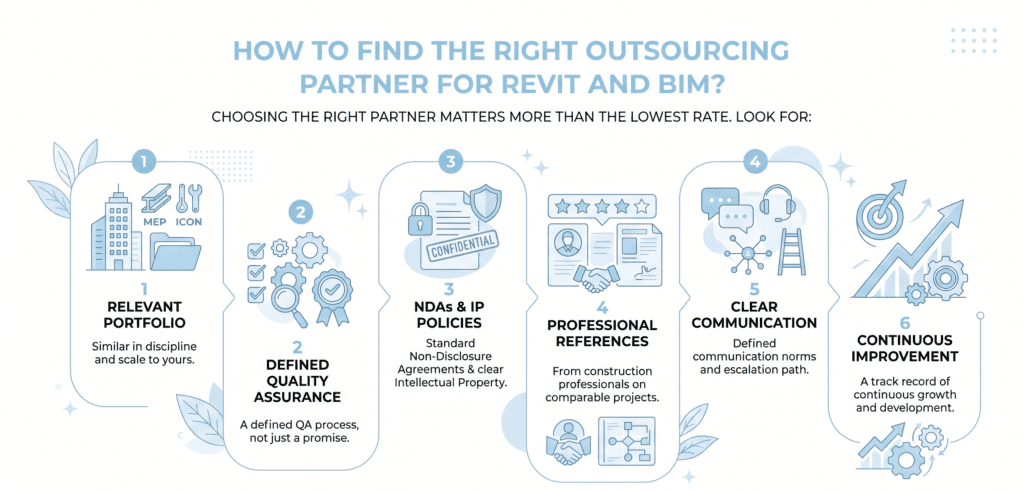
Choosing the right partner matters more than finding the lowest rate. Look for:
- A portfolio of projects similar in discipline and scale to yours
- A defined quality assurance process – not just a promise of quality
- Non-disclosure agreements and clear intellectual property policies as standard
- References from construction professionals with comparable project types
- Clear communication norms and a defined escalation path
- A track record of continuous improvement, not just delivery
MastTeam works with architectural firms, contractors, and engineers on Revit modeling services across architecture, structure, and MEP disciplines. Get in touch to discuss your project scope.
FAQ
What is Revit BIM outsourcing?
It means delegating Revit modeling tasks – building models, producing construction drawings, running clash detection, creating families – to an external team while retaining ownership of all deliverables.
How much does outsourcing Revit work cost per hour?
Rates range from $15 – $40/hr in Eastern Europe or South Asia to $65 – $120/hr and above for US or UK providers. Price depends on the complexity, discipline and type of engagement.
What services can be handled externally?
Most Revit services can be outsourced: architectural and structural models, MEP systems, shop drawings, point cloud conversion, Revit family creation, and quantity takeoffs.
Is it safe to share the project files with the external team?
Yes, but only with the right contracts in place. Before you share any files, you’ll want non-disclosure agreements and intellectual property policies documented.
How to manage a project with an external Revit team?
Define scope clearly up front, set key milestones for staged reviews, use shared BIM platforms, keep communication clear through a single point of contact and review models at each stage – not just at final delivery.