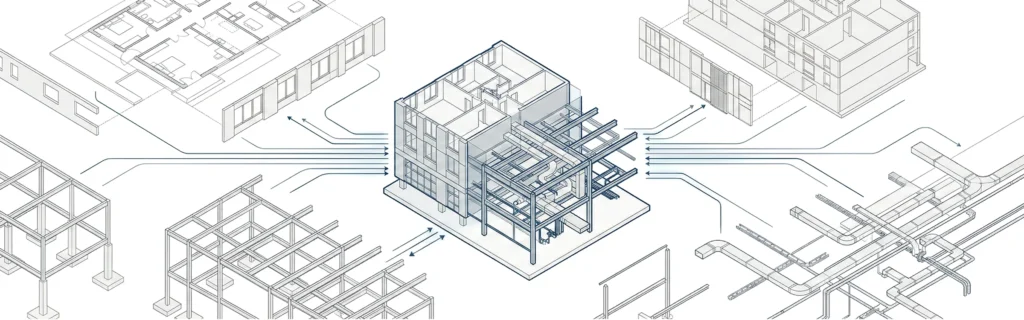

Explain Building Information Modeling for Beginners
When people ask how does BIM work, they usually expect a short explanation about 3D models. In reality, Building Information Modeling is a comprehensive information modeling methodology that transforms how a construction project is planned, designed, built, and operated. BIM is not a single tool or software-it is a structured process supported by digital technologies and collaboration rules.
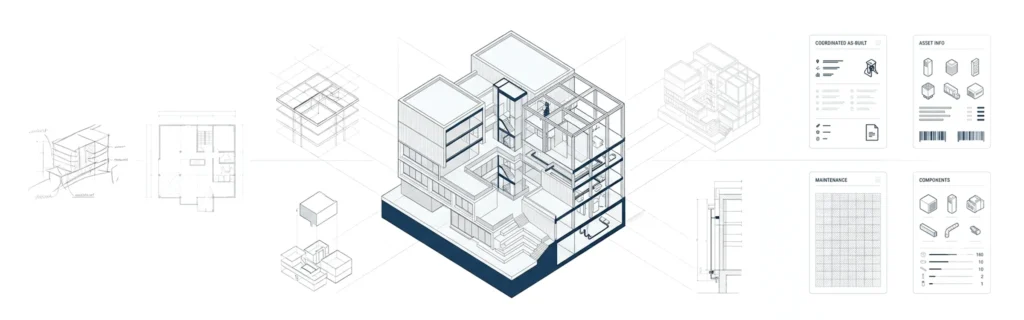
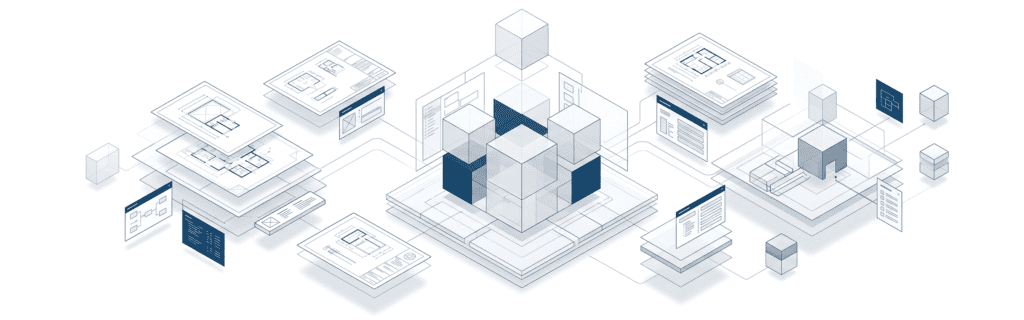
At its core, BIM creates a shared digital representation of a building or infrastructure asset. This representation is used by project teams, construction professionals, and building owners as a single source of truth. Instead of working with fragmented drawings and documents, everyone collaborates around the same building information model, which stays up to date throughout the entire lifecycle of the project.To understand why BIM matters today, it helps to start with the fundamentals of building information modeling.
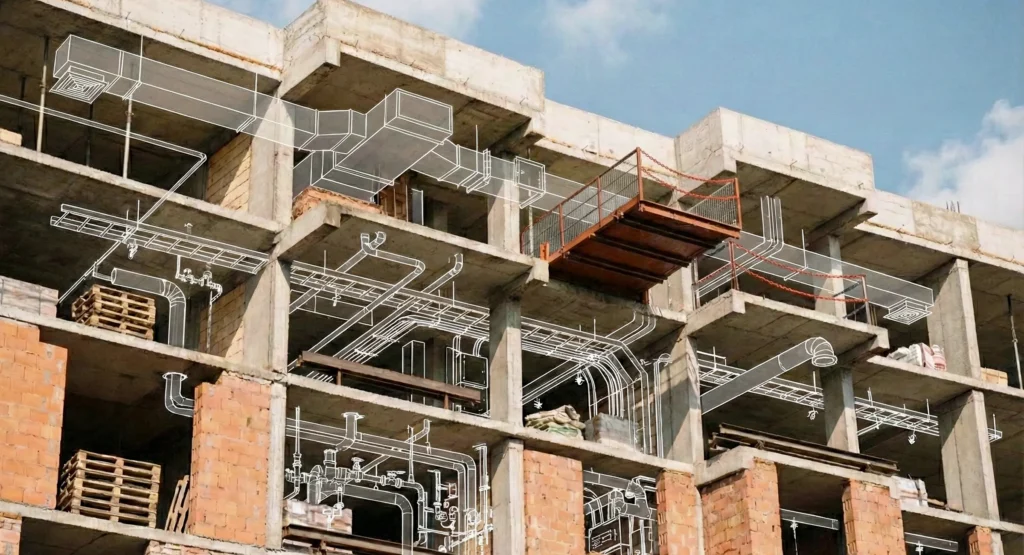
Core Principles of Building Information Modeling
The way BIM works is defined by several core principles that distinguish it from traditional approaches.
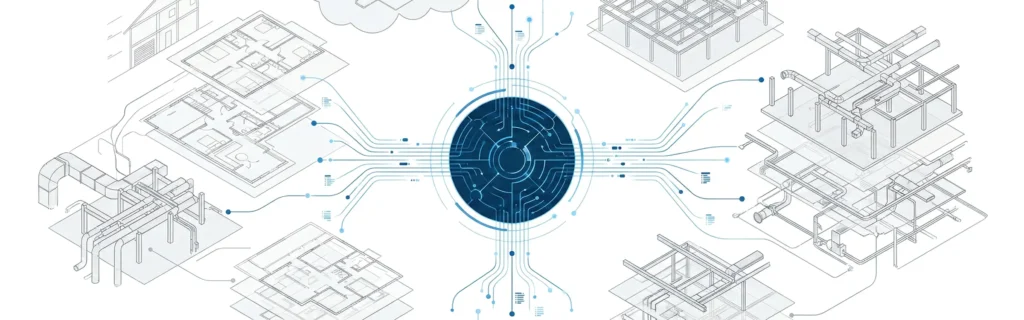
First, BIM relies on a common data environment, where all project information is stored, managed, and shared. This ensures that relevant information is accessible to the entire project team, reducing duplication and errors.
Second, BIM uses data-rich bim objects instead of simple lines or shapes. Each object contains geometry plus non-graphic information such as materials, performance data, and functional characteristics.Third, BIM supports continuous collaboration among parties involved across design and construction processes. Architects, engineers, contractors, and owners work with aligned design and construction intent, improving coordination and accountability.
What Is the Process of BIM From Start to Finish
Understanding how does BIM work requires looking at the full bim process, not just isolated phases.
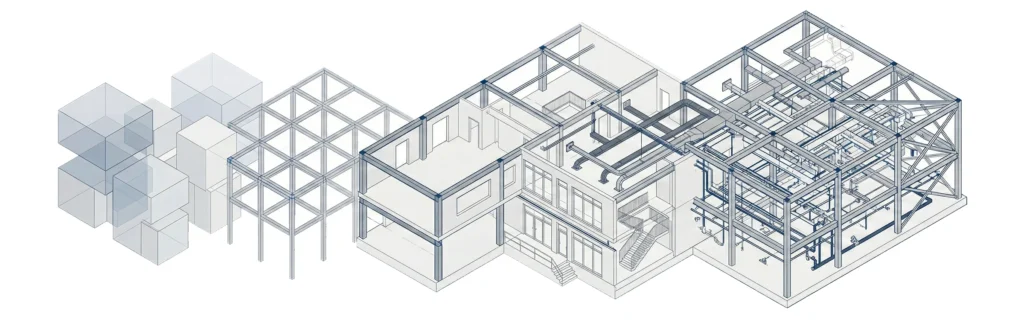
Conceptual Design
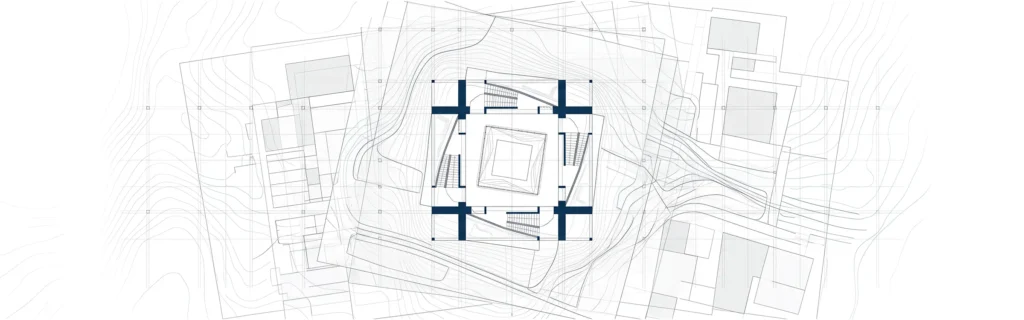
During conceptual design, early models explore massing, orientation, and spatial relationships. Geometry is approximate, but it supports early decision making and initial cost studies for building projects.
Design Phase
In the design phase, disciplines develop coordinated 3D models representing architectural, structural, and building systems such as mechanical, electrical, and plumbing. The focus is accuracy, coordination, and constructability.
Construction Phase
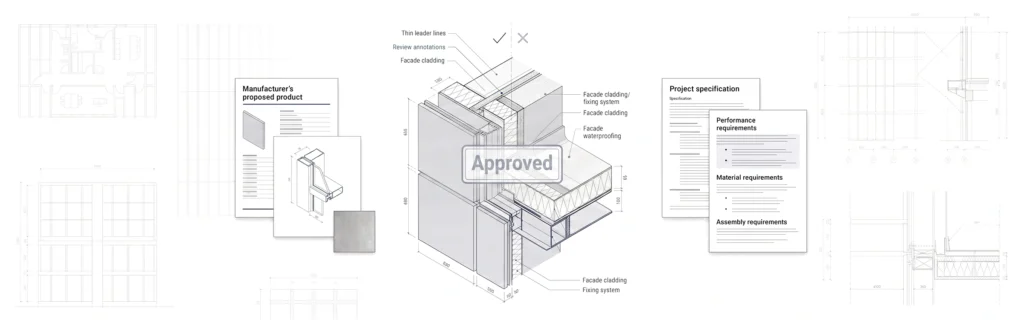
During the construction phase, BIM supports coordination on the construction site, sequencing, clash resolution, and quality assurance. Construction teams rely on the model to understand construction intent and reduce rework.
Handover and Operations
At handover, the BIM model evolves into a data-rich asset supporting facilities management. Facilities managers use the model to track assets, plan maintenance, and control maintenance costs over time.
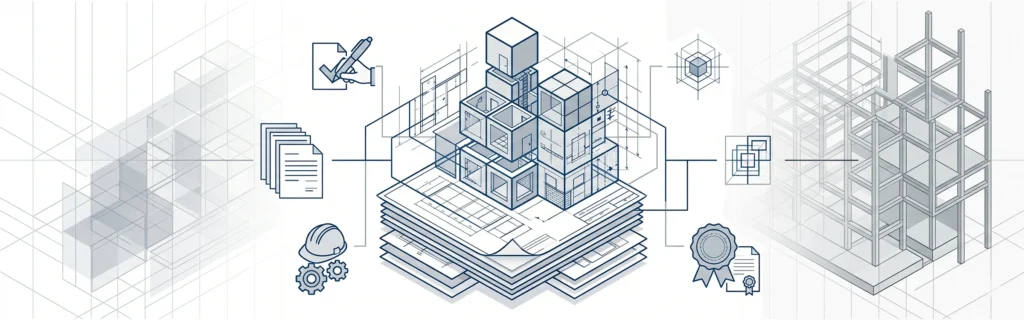
This continuous workflow connects design, construction, and operations into a single project lifecycle.
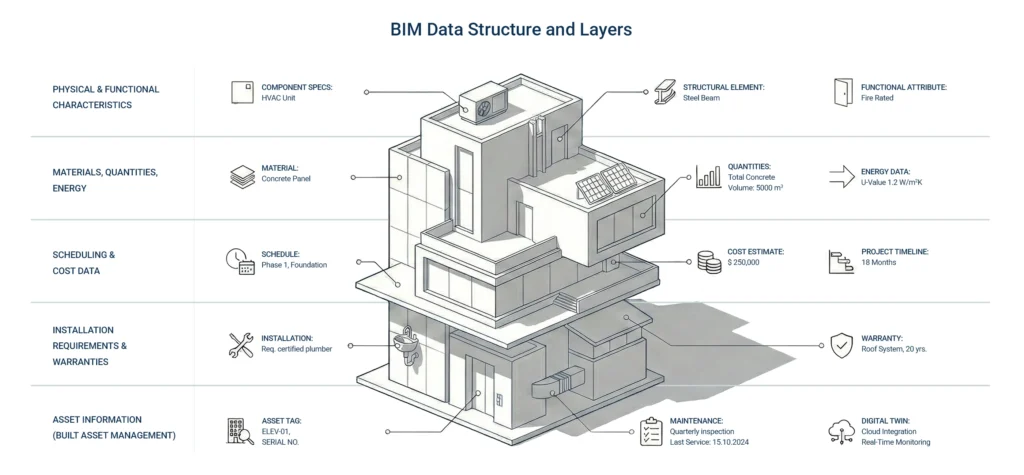
What Data Is Included in a BIM Model
A BIM model is far more than geometry. It contains structured project information used throughout the entire process.
Typical BIM data includes:
- Physical and functional characteristics of components
- Materials, quantities, and energy consumption data
- Scheduling and cost data
- Installation requirements and warranties
- Asset information for built asset management
Because BIM models store relevant project information, they enable efficient management and informed decision making across all project stages.
What Are the Dimensions of BIM 3D 4D 5D
BIM dimensions describe how additional data layers enhance the 3D model.
- 3D BIM focuses on geometry and coordination.
- 4D BIM links time and scheduling to model elements.
- 5D BIM connects cost estimation and budgeting.
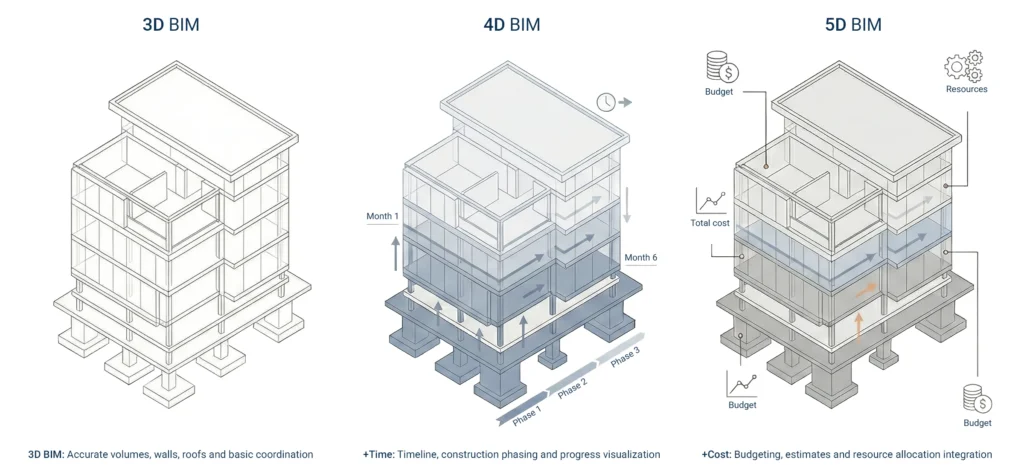
Higher dimensions support better forecasting, reduced upfront costs, and improved project outcomes, especially in complex aec project environments.
Building Information Modeling in the Construction Industry
Across the construction industry, BIM has become a foundation of digital transformation. AEC professionals use BIM to manage complexity, align stakeholders, and improve delivery certainty.Modern construction teams increasingly rely on BIM to coordinate across disciplines and manage risks associated with large-scale construction activities. As a result, BIM adoption continues to grow across the built environment.
Benefits of Using BIM in Construction
The benefits of BIM are both technical and organizational.
Key advantages include:
- Improved collaboration across project teams
- Better coordination of building systems
- Reduced errors and rework
- More accurate cost estimation
- Better long-term facilities management
These benefits explain why BIM is considered essential for achieving better project outcomes.
What Problems Does Building Information Modeling Solve
BIM solves many problems inherent in traditional workflows.
Common issues include:
- Fragmented cad software files
- Poor information management
- Misaligned schedules and budgets
- Late discovery of conflicts
By replacing traditional CAD approaches with a data-centric methodology, BIM improves quality assurance and coordination across the construction process.
BIM vs CAD Comparison
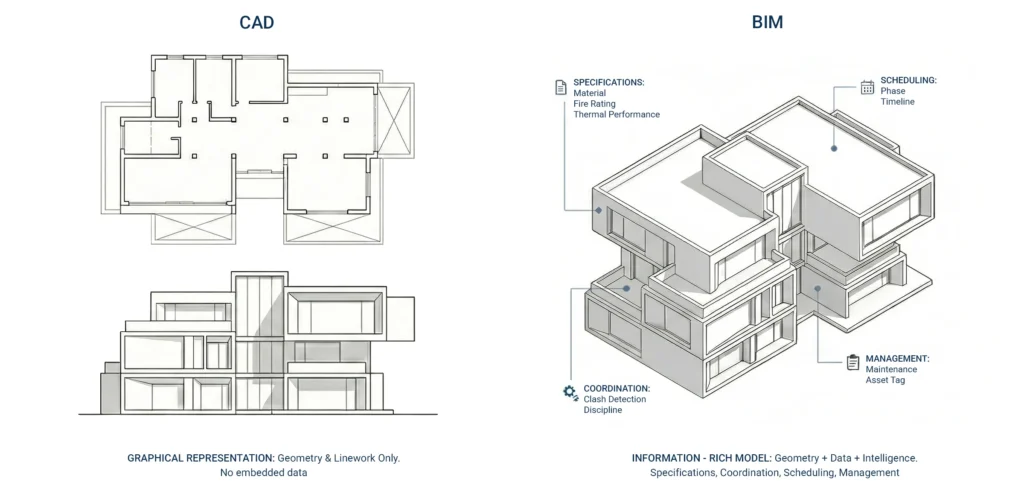
The key difference between BIM and CAD lies in purpose. CAD focuses on drawings, while BIM focuses on information.
A CAD file represents geometry. A BIM model represents geometry plus data that supports planning, coordination, and management across design and construction. For a deeper explanation, see what is the difference between CAD and BIM.
List of Popular BIM Software
Modern bim software includes modeling, coordination, and data-management platforms that support the BIM ecosystem. These powerful tools enable simulation, collaboration, and analysis across building projects. To explore this topic in detail, see what Is BIM software.
Is BIM Useful for Small Projects
Yes, BIM is useful for small projects. While upfront costs may be higher, BIM helps small teams reduce errors, manage scope, and improve coordination.Even modest projects benefit from shared project information, clearer communication, and improved project outcomes.
How Can an Architecture Student Start Learning BIM
Students can start learning BIM by understanding the design process, basic BIM workflows, and industry-standard bim tools. Hands-on experience with real bim projects is essential for building practical skills.
How BIM Works for Different Project Roles
BIM supports different stakeholders in different ways.
- Architects use BIM to develop coordinated design intent.
- Engineers rely on BIM for system coordination and analysis.
- Project managers use BIM for scheduling, budgeting, and risk control.
- Construction professionals use BIM to understand construction intent on site.
- Building owners use BIM to manage assets after handover.
This role-based value explains BIM’s broad adoption.
BIM Data Flow From Design to Facilities Management
BIM data flows continuously from early design through construction and operations. Instead of recreating information at each stage, BIM preserves data continuity.
This flow supports:
- Consistent project requirements
- Accurate asset records
- Reduced data loss
- Better long-term operational decisions
BIM for Project Management and Decision Making
BIM supports effective management by providing reliable data early. Project managers can evaluate options, assess risks, and make informed decisions before costly changes occur.This leads to reduced delays, better coordination, and improved project outcomes.
Building Information Modeling and Outsourcing Workflows
In outsourced BIM workflows, clear standards are critical. Defined BIM processes, responsibilities, and quality checks ensure that external teams deliver consistent results.Organizations working with experienced partners like MastTeam can scale BIM delivery while maintaining model quality and data integrity. To discuss structured workflows, Contact MastTeam via the Contacts page.
BIM Level of Development FAQs
How does BIM work in simple terms?
BIM works by creating a shared digital model that stores geometry and data for all stakeholders.
What is a BIM model and how does it work?
A BIM model combines 3D geometry with structured data used throughout the project lifecycle.
Is BIM only used during design?
No. BIM supports design, construction, and facilities management.
Does BIM replace CAD completely?
BIM does not fully replace CAD but offers a more data-driven approach.
Why is BIM important in modern construction?
BIM improves collaboration, reduces errors, and delivers better project outcomes.