
Advantages of BIM in Building Projects
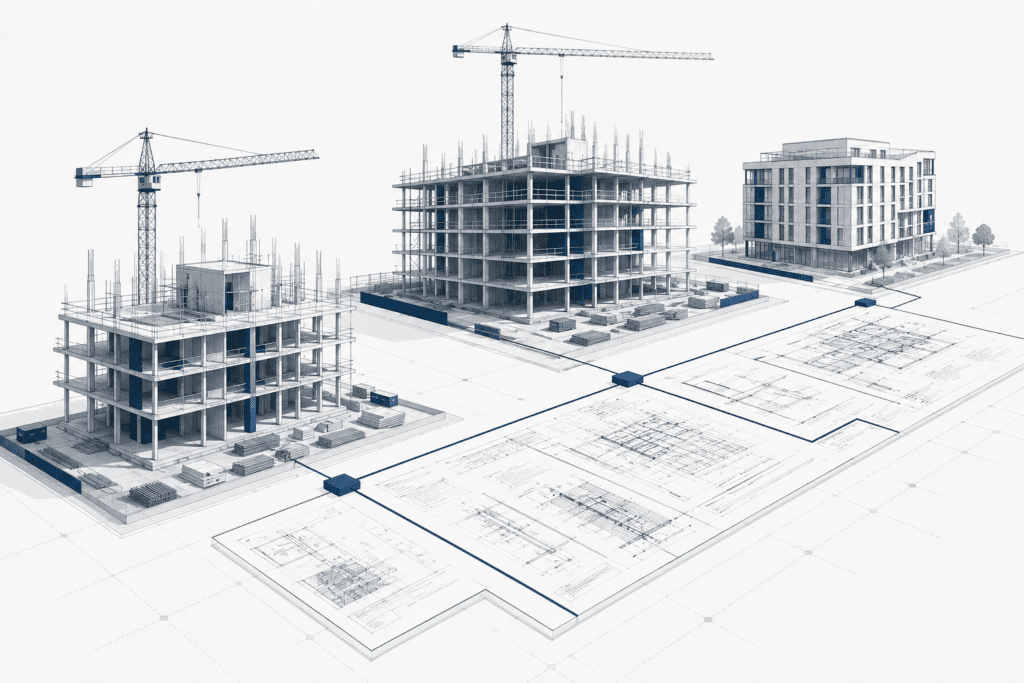
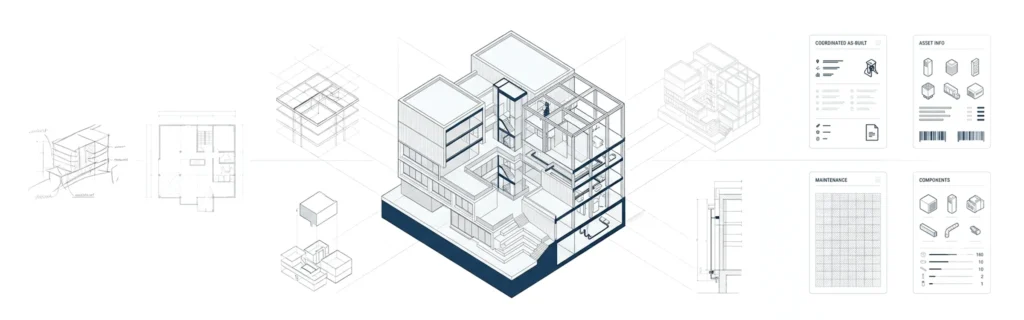
Construction has always depended on getting many moving parts to line up: design intent, structural elements, mechanical systems, and the people building it all. Building information modeling changes how that alignment happens. Instead of static drawings, design and construction teams work from detailed models that carry real project information from the first sketch through to long term facility management.
The core advantages of BIM in construction show up at almost every stage of the construction lifecycle: fewer errors during design, better cost control during preconstruction, safer job sites during the build, and cleaner handover data once construction begins winding down toward occupancy. For the construction industry, this is less about adopting a new piece of software and more about changing how a project team shares and trusts project information.
Below, we break down the benefits of BIM by the questions construction professionals actually ask before, during, and after implementing BIM on a project.
How Does BIM Improve Construction Projects?
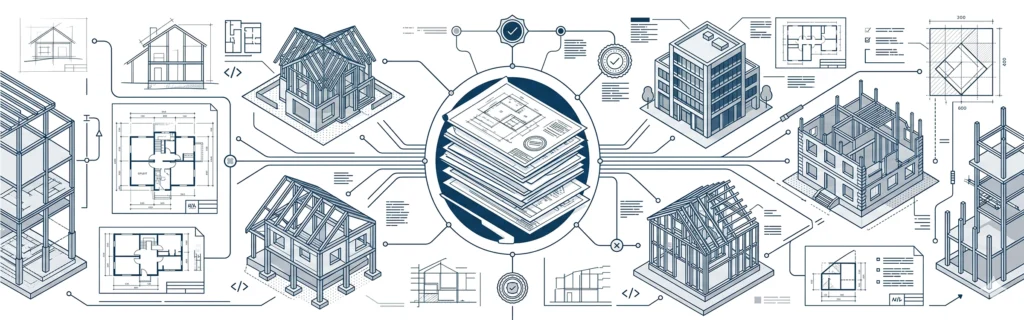
BIM improves construction projects by giving every discipline a shared, data-rich model instead of dozens of disconnected drawings. That single source of truth reduces the guesswork that causes delays, rework, and disputes over whose version of a drawing is correct.
Digital Coordination Software and the Common Data Environment
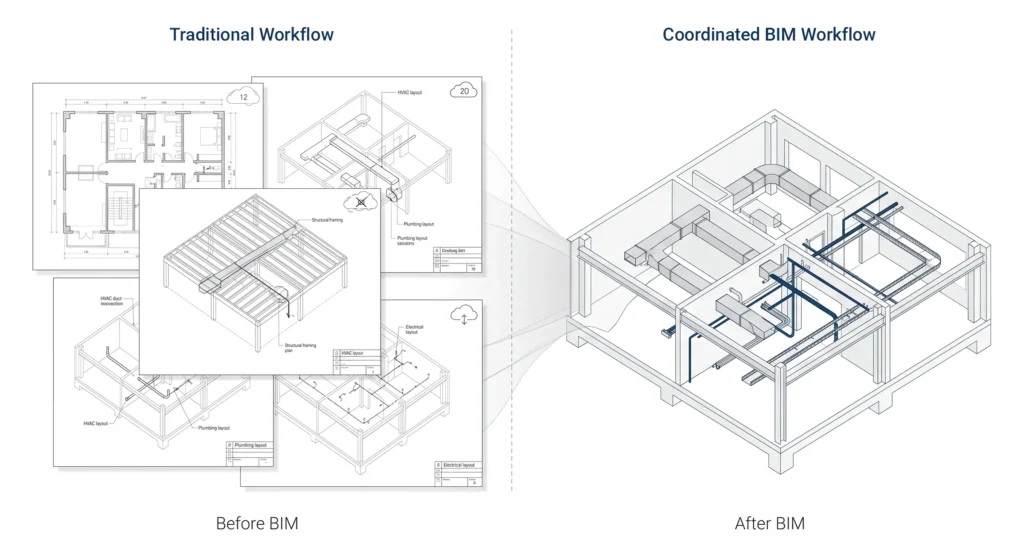
At the center of most BIM workflows is a common data environment: a cloud based platform where architects, engineers, and construction teams collaborate on the same models in real time. Digital coordination software pulls structural, mechanical, and architectural models into one coordinated environment, so teams collaborate without waiting on email chains or outdated PDF sets.
This kind of coordination software enhance version control across the entire project, since every stakeholder is working from the same live files rather than emailed attachments. Cloud storage and cloud based platforms also mean facility teams and facility managers can access project documents long after construction is finished, supporting asset management and long term facility management well into a building’s operational life.
Early Clash Detection Before Construction Begins
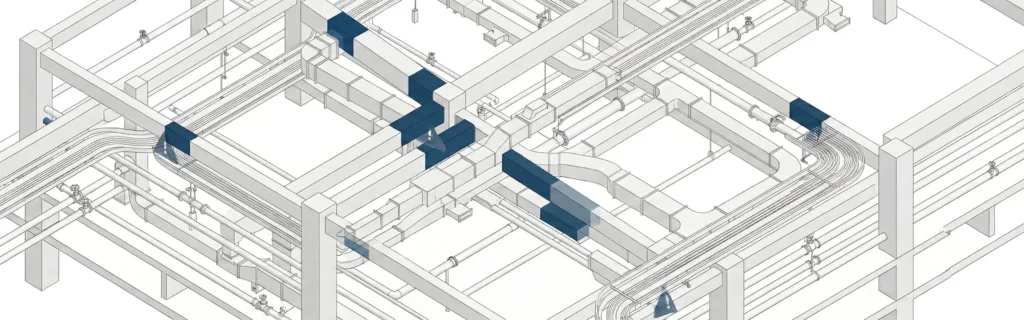
One of the most concrete benefits of BIM is catching problems on screen instead of on site. Early clash detection identifies where structural elements, ductwork, piping, and building components physically conflict, long before construction begins. Bim eliminates a large share of the costly rework that used to only surface once crews were already on site, because clashes between different software platforms and disciplines are resolved digitally first.
For complex projects with tight tolerances, this single capability often justifies bim implementation on its own.
BIM for Cost Estimation in Construction
Accurate cost estimation is one of the most requested benefits of BIM. Because detailed models carry real quantities, dimensions, and material specifications, bim data can be extracted directly for cost management instead of manually measuring drawings. This connects design decisions to material costs almost immediately, giving design and construction teams a clearer read on budget impact before construction begins.
Bim software also supports scenario testing: swapping structural elements or building components and instantly seeing the cost and schedule impact. That level of accurate cost estimation is difficult to match with traditional 2D methods, and it is a major reason bim technology has become standard on complex projects across civil engineering and vertical construction alike.
BIM Benefits for Project Managers
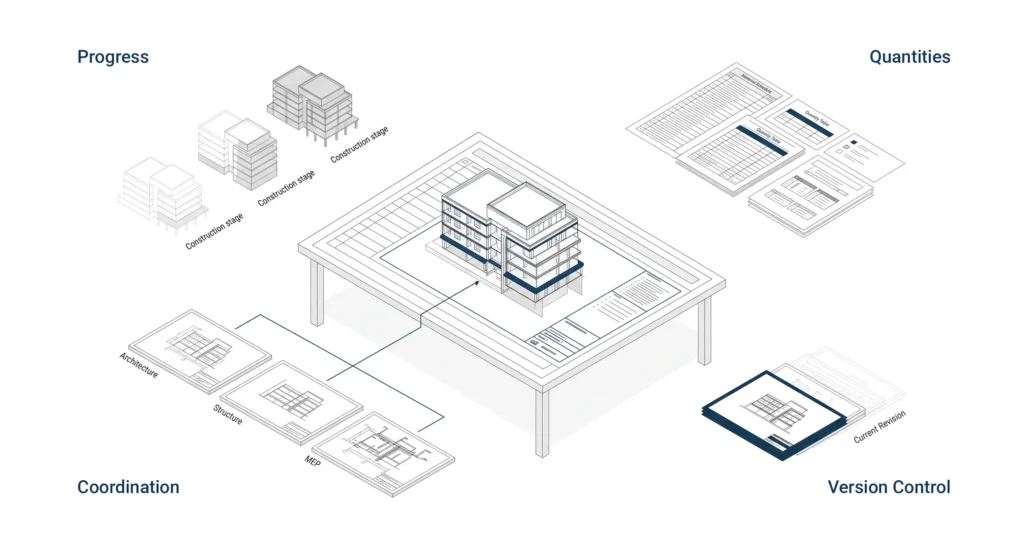
For project managers, BIM benefits are mostly about visibility and control. Detailed models make it easier to track project planning against the actual construction process, flag risks earlier, and keep the project team aligned on the same page.
Key benefits for project managers include:
- Real time data on progress, quantities, and open issues across the construction lifecycle
- Better version control, so outdated project documents don’t circulate on site
- Clearer coordination between subcontractors working from the same bim process
- Fewer surprises during construction, since clashes and conflicts surface during design
Because bim modeling centralizes project information, project managers spend less time chasing updates and more time managing the entire project.
How Small Construction Firms Can Benefit from BIM?
Small construction firms sometimes assume BIM is only for large civil engineering programs or major developers, but adopting BIM scales down well. Cloud based coordination platforms mean a small firm doesn’t need heavy in-house infrastructure to get started; many BIM platforms are subscription-based and priced for smaller teams.
For a small firm, the benefits of BIM often show up fastest in bidding and cost estimation. Accurate cost estimation from detailed models helps smaller construction teams put together tighter, more competitive proposals. Improved collaboration with subcontractors and suppliers, even on smaller construction projects, also reduces the coordination overhead that a small back office would otherwise absorb manually.
The main hurdle is usually training and initial setup rather than the technology itself, which is why many smaller firms start by outsourcing parts of the bim modeling work rather than building an in-house team from day one.
How BIM Improves Safety on Construction Sites?
Safety is one of the less discussed but significant benefits of BIM in construction. Detailed models let teams plan site logistics, equipment staging, and access routes before construction begins, reducing the improvisation that often leads to site accidents.
Bim’s ability to simulate sequencing also helps construction teams identify hazardous overlaps, such as crane paths crossing active work zones, before they happen in the field. Combined with real time data from site sensors or drone scans, BIM gives construction teams an ongoing picture of site conditions rather than a static safety plan drawn up once and never revisited.
BIM Implementation Challenges in Construction
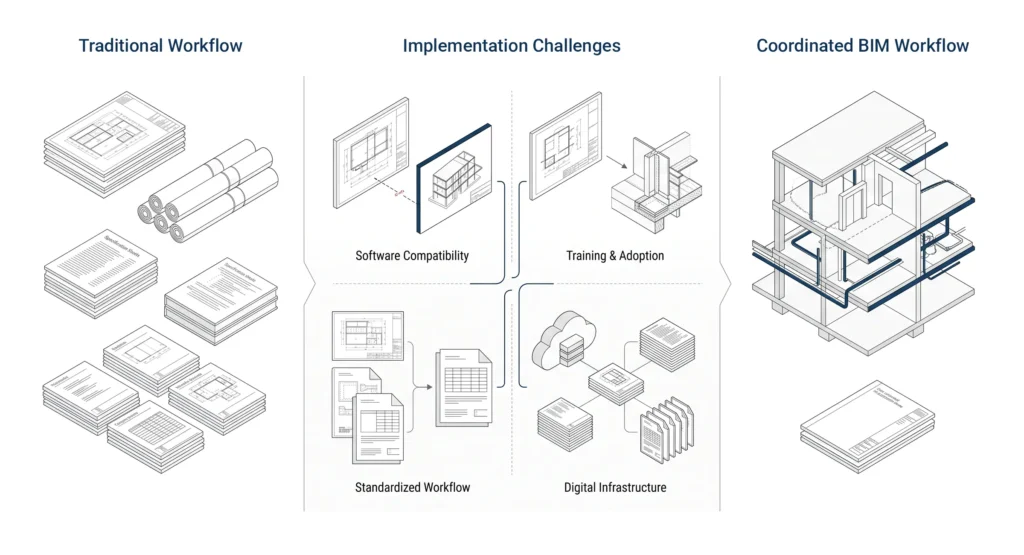
Adopting BIM is not without friction. Common bim implementation challenges include:
- Getting different software platforms and bim platforms to maintain bim interoperability without data loss
- Training construction teams who are used to traditional drawings and construction methods
- Standardizing a bim process across multiple project teams and subcontractors
- Investing in cloud storage, digital tools, and coordination software before benefits are fully realized
None of these are reasons to avoid BIM, but they do mean adopting bim technology works best as a phased rollout rather than an overnight switch, especially on complex projects with many stakeholders.
ROI of BIM in Construction Projects
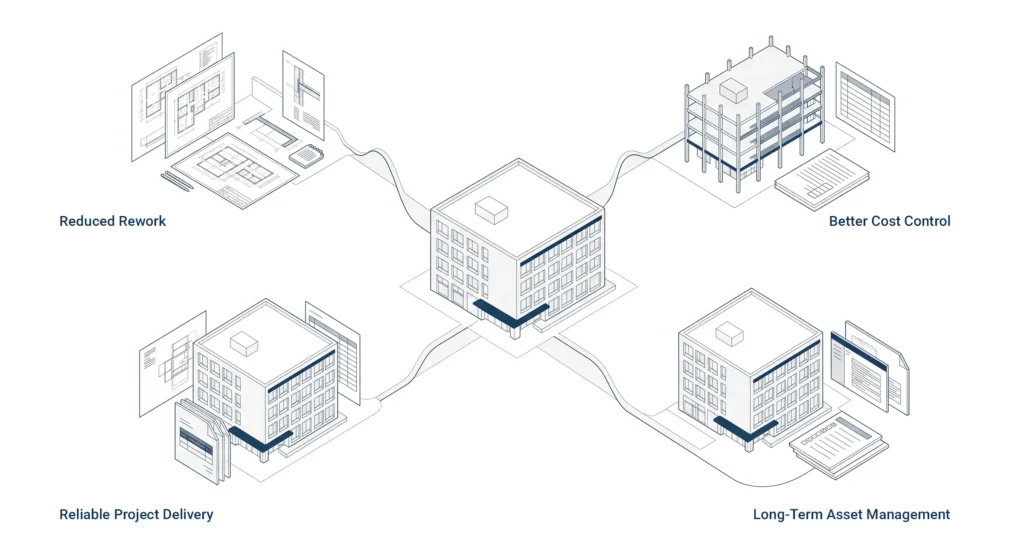
The ROI of BIM in construction projects comes from several places at once: reduced rework from early clash detection, tighter cost management from accurate cost estimation, and fewer schedule slips from better coordination. Individually, each saving may look modest. Across an entire project, particularly a large or complex one, they add up quickly.
Facility managers also see ROI long after construction is complete. Detailed models handed over at the end of a project support asset management and long term facility management, since building component data, structural elements, and system specifications are already documented digitally instead of buried in paper as-builts.
Top Benefits of BIM in Construction (Quick Summary)
- Improved collaboration between design and construction teams
- Early clash detection that reduces costly rework
- More accurate cost estimation and cost control
- Better safety planning before construction begins
- Real time data shared across a common data environment
- Stronger version control across project documents
- Support for long term facility management and asset management
- Easier coordination across complex projects and multiple software platforms
- Faster, more informed decisions during the design phase
- A documented digital record that follows a building through its entire project lifecycle
Across the construction sector, these BIM advantages are why building information modeling has moved from an emerging technology to a standard part of the construction process for firms of every size.
If you’re evaluating bim implementation for an upcoming project, MastTeam’s team can walk through what a coordinated bim process would look like for your construction teams – get in touch through our Contacts page.
FAQ
What are the main benefits of using BIM in construction?
The main benefits of BIM include improved collaboration, early clash detection, more accurate cost estimation, better safety planning, and a documented model that supports facility management after construction ends.
How does BIM improve construction projects specifically?
BIM improves construction projects by giving design and construction teams a shared, data-rich model, reducing the miscommunication and rework that come from disconnected drawings and outdated project documents.
Is implementing BIM worth it for a small construction firm?
Yes, in most cases. Small firms often see fast returns through more accurate cost estimation and improved collaboration with subcontractors, even without a large in-house BIM team.
What is the ROI of BIM in construction projects?
ROI comes primarily from reduced rework, tighter cost control, and fewer schedule delays, plus long-term value from digital records that support asset and facility management.
What are common BIM implementation challenges?
Common challenges include interoperability between software platforms, training construction teams on new workflows, and standardizing a consistent bim process across project teams.
Does BIM improve safety on construction sites?
Yes. Detailed models help teams plan site logistics and sequencing in advance, reducing hazardous overlaps and improvised decisions in the field.