
What Is a Submittal in Construction?
The submittal meaning in construction comes down to one simple idea: a submittal is a formal document, drawing, or sample that a contractor or subcontractor sends to the design team for review before materials are ordered or work begins, often building on decisions already made back at the DD drawings stage. Instead of guessing whether a proposed product, drawing, or material matches the project specifications, everyone involved uses submittals to confirm it in writing.
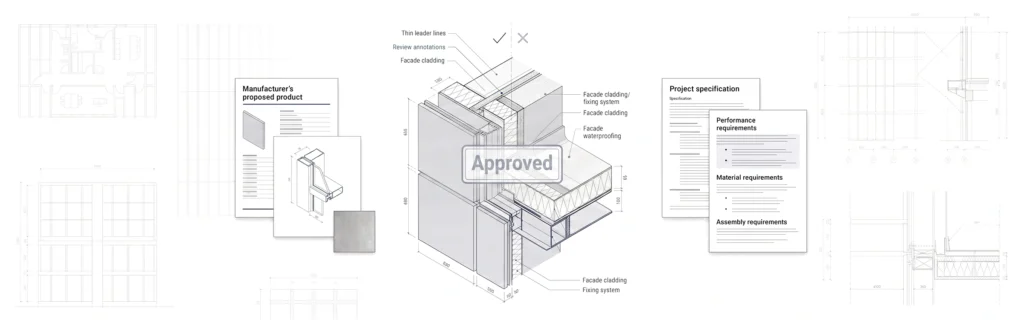
In practice, a submittal can be a set of detailed drawings, a technical data sheet, a physical material sample, or a test report. What ties them together is their function: they let architects, engineers, and the construction manager verify that what’s about to be built or installed actually matches the project manual and contract documents before it’s too late to make changes. This is why submittals are treated as a core part of a project’s broader construction documentation, not a side task.
The Purpose of a Submittal in Construction
The purpose of a submittal is quality assurance. Before a subcontractor installs a curtain wall system, pours concrete, or orders custom millwork, someone needs to confirm the proposed materials meet the project requirements. Submittals create that checkpoint.
Without a formal review and approval step, small mismatches between what’s specified and what’s ordered can turn into costly mistakes. A submittal process gives the design team a chance to catch problems on paper rather than on the job site, where fixes mean delays, rework, and disputes. For construction projects with tight schedules, this single step often protects project success more than any other piece of documentation, which is why teams working with MastTeam’s architectural construction documentation services tend to move through review with fewer surprises.
Types of Construction Submittals
Not every submittal looks the same. The type depends on what’s being reviewed and what information the architects or engineers need to verify compliance.
Shop Drawings
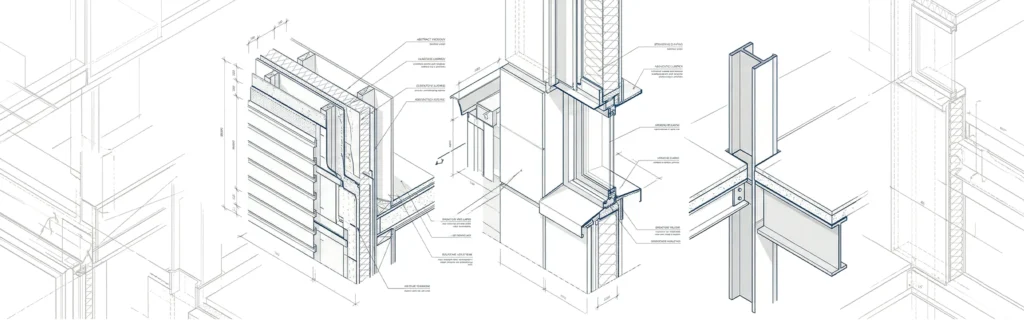
Shop drawings are detailed drawings prepared by a subcontractor or manufacturer showing exactly how a component will be fabricated and installed. These go beyond the design team’s original drawings, adding dimensions, connections, and installation details specific to the selected products.If you’d like to better understand the differences between shop drawings and construction drawings, our guide explains how each fits into the overall construction documentation set.
Product Data
Product data sheets, also called cut sheets, are manufacturer-issued documents describing the technical information, performance ratings, and testing information for a proposed product. Reviewers use them to confirm that proposed materials meet the specifications without needing a physical sample.
Material Samples
Material samples are small physical pieces of the actual product, like a tile, a paint finish, or a stone sample, submitted so the design team can check color, texture, or finish in person. Samples are especially common for finish materials where product data sheets alone don’t tell the full story.
Other common submittal types include maintenance manuals, product manuals, and test reports required for close-out documentation once installation is complete.

Submittal vs Transmittal
These two terms get confused constantly, but they serve different roles.
| Submittal | Transmittal | |
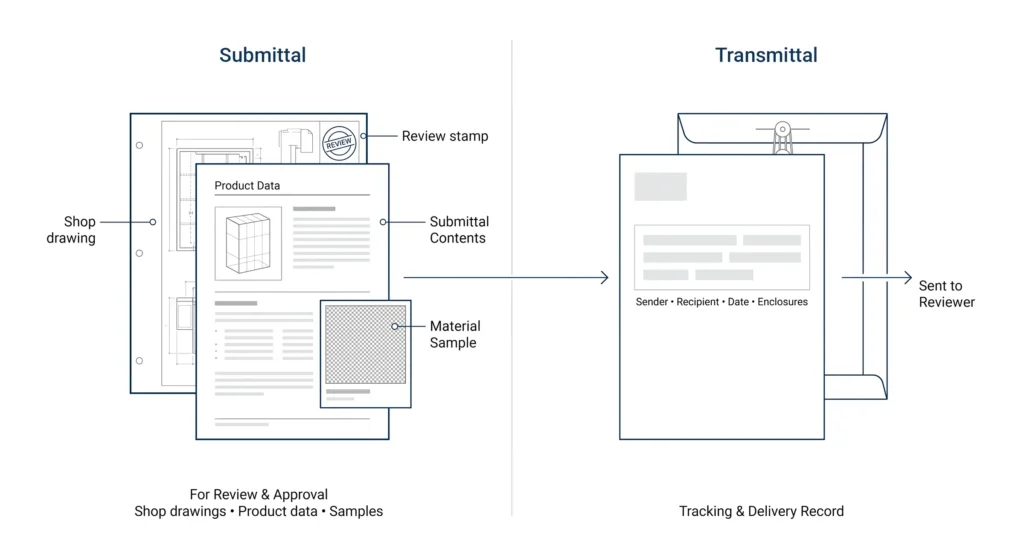
| Definition | A formal document, drawing, or sample sent for review and approval | A cover document that tracks what’s being sent, to whom, and when |
| Purpose | Verify compliance with project requirements | Provide a paper trail for anything transmitted between parties |
| Content | Shop drawings, product data, samples | A log of enclosures, dates, and recipients |
| Outcome | Approved, approved as noted, revise and resubmit, or rejected | No approval status; it’s a tracking record |
In short, a transmittal often accompanies a submittal, but a transmittal itself isn’t reviewed for approval – it’s just the paperwork confirming what was sent.
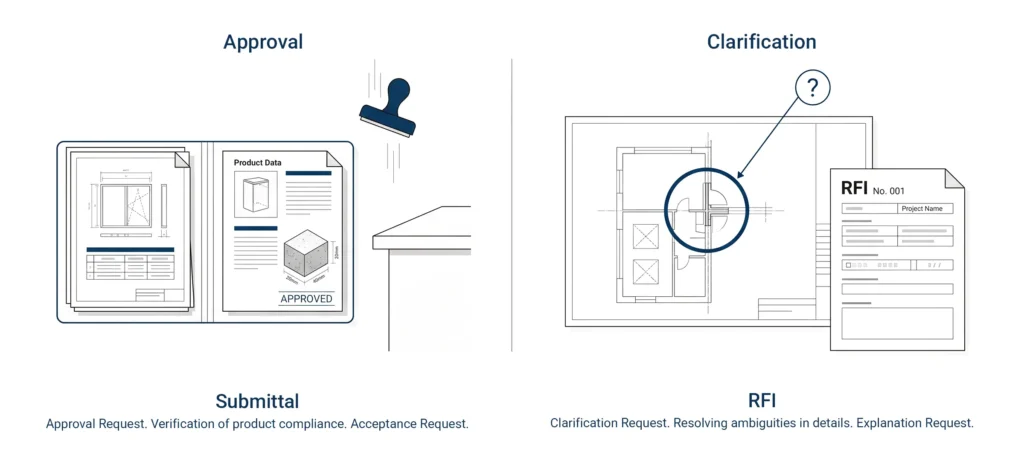
Submittal vs RFI in Construction
A Request for Information (RFI) and a submittal are both formal document types used during construction, but they answer different questions.
| Submittal | RFI | |
| Purpose | Confirms proposed materials or drawings meet specifications | Seeks clarification when the contract documents are unclear or conflicting |
| Timing | Typically before ordering or installation | Can occur any time a question arises during design or construction |
| Who initiates | Subcontractor or general contractor | Contractor, subcontractor, or construction manager |
| Response | Approval status | A written answer or clarification |
If a subcontractor already knows what’s specified and just needs sign-off on the proposed materials, that’s a submittal. If they need someone to seek clarification on something the drawings don’t explain, that’s an RFI.
Who Is Responsible for Preparing and Reviewing Submittals?
Responsibility is split across several roles. The subcontractor or supplier typically prepares the submittal, since they know the specific products, drawings, or samples being proposed. The general contractor usually compiles submittals from multiple subcontractors, checks them against the project schedule, and forwards them to the design team. Firms that choose to outsource architectural services often rely on this same shared responsibility model to keep drawings and submittals coordinated across teams.
Once received, the architect and engineer review the submittal to ensure that it meets the project specifications and contract documents. The construction manager provides an additional level of coordination on larger projects, tracking the submittal status through a submittal log to ensure that nothing falls behind schedule, often with dedicated architectural project management services to keep submittals from multiple trades moving in sync. Clear communication between all parties involved is what keeps the review process from stalling.
The Construction Submittal Review Process
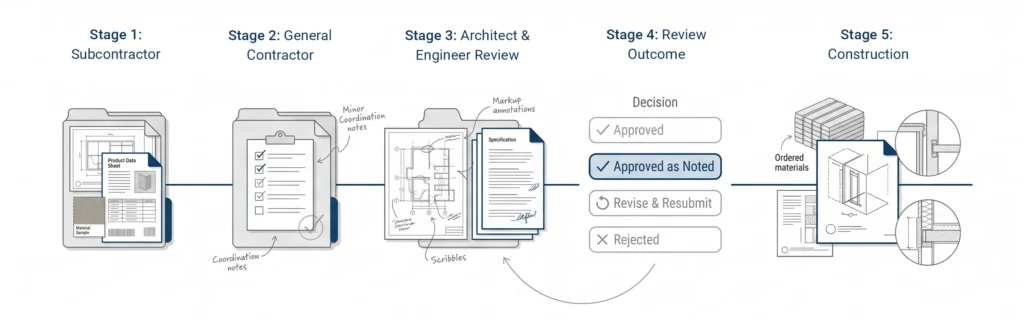
A typical submittal workflow follows a consistent sequence:
- The subcontractor prepares the submittal package, including drawings, product data, or samples.
- The general contractor reviews it for completeness and consistency with other trades before forwarding it.
- The design team (architects and engineers) reviews the submittal against the specifications.
- The reviewer returns one of several outcomes: approved, approved as noted, revise and resubmit, or rejected.
- Approved submittals are logged, and the contractor proceeds with ordering or installation.
- Any submittal marked “revise and resubmit” goes back through the cycle until it’s approved.
A submittal schedule, often tied to the overall project schedule, sets target dates for each step so lead times for ordering materials don’t create delays.
How to Prepare a Submittal Package for a General Contractor
For a subcontractor putting together a submittal package, a few habits make the process smoother:
- Start early. Long lead times on certain materials mean submittals should go out well before installation is scheduled to begin.
- Cross-check every item against the project specifications and project manual before submitting anything.
- Include complete product data sheets, not partial cut sheets that leave out testing information.
- Label and organize the package clearly so the general contractor and design team can track each item without confusion.
- Flag missing information upfront rather than letting reviewers discover gaps later.
- Keep a copy in your own submittal log to track review status and any resubmission requirements.
Following these steps helps ensure compliance on the first pass and avoids unnecessary rounds of review.
Common Reasons for Submittal Rejection
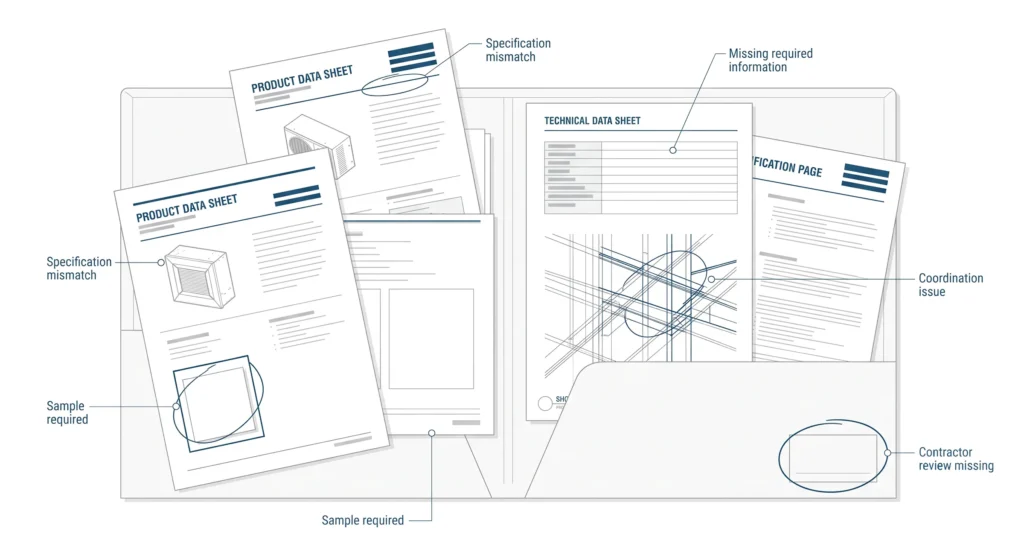
Even experienced teams see rejections. The most frequent causes include:
- Proposed materials that don’t match the project specifications or design intent
- Incomplete product data sheets missing required testing information or dimensions
- Submittals sent without required samples when the specification calls for one
- Missing coordination with other trades, causing conflicts once drawings are compared
- Submittals missing signatures, stamps, or contractor review before being forwarded
Most of these issues are avoidable with a careful check against the specifications before submission.
What Happens if a Submittal Is Rejected
A rejected submittal doesn’t bring the project to a halt, but it does require action. The subcontractor revises the submittal to correct the reviewer’s comments and resubmits it through the same process. Depending on the complexity, this can involve updating drawings, swapping proposed materials, or providing additional test reports.
Because each round of review takes time, repeated rejections can affect the project schedule. That’s one more reason a thorough first submission, checked carefully against project requirements, tends to save everyone time in the long run. If you’d like to talk through how submittal preparation fits into your project workflow, reach out through our contact page.
FAQ
What is a submittal in construction? A submittal is a formal document, drawing, or sample submitted for review to confirm that proposed materials or work match the project specifications.
What is the main difference between a submittal and a transmittal? A submittal is reviewed for approval, while a transmittal is simply a cover document tracking what was sent and to whom.
What are the different types of construction submittals? Common types include shop drawings, product data sheets, material samples, test reports, and maintenance manuals.
Who reviews submittals on a construction project? Architects and engineers typically review submittals for compliance, often coordinated through the general contractor and construction manager.
What happens if a submittal is rejected? The subcontractor revises the submittal based on reviewer comments and resubmits it, repeating the review cycle until it’s approved.
How is a submittal different from an RFI? A submittal confirms proposed materials meet specifications, while an RFI is used to seek clarification when contract documents are unclear.