
Explain BIM Coordination in Simple Terms
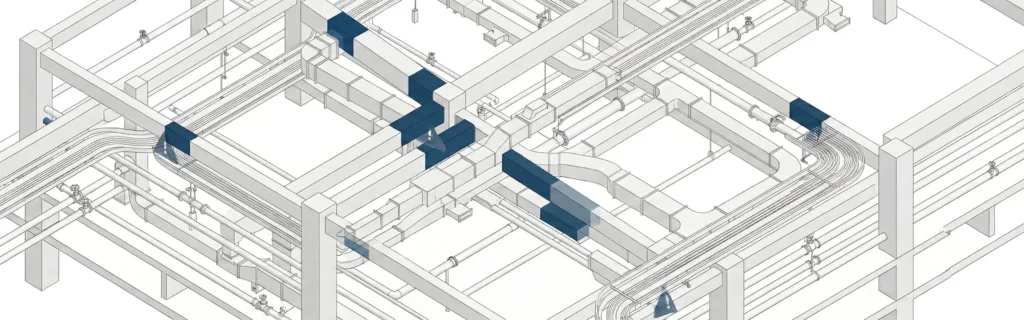
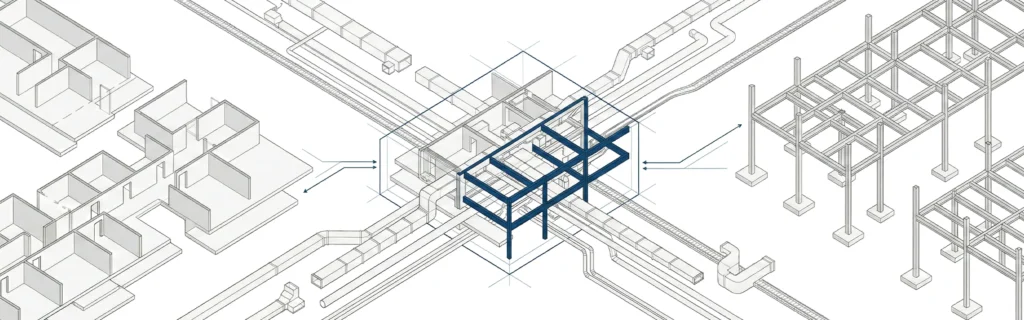
BIM coordination is the practical work of getting architectural, structural, and MEP information to line up inside shared BIM models so a construction project can move from design to field without constant surprises. If you’ve ever heard “the ceiling space is too tight” or “the duct hits the beam,” BIM coordination is the proactive approach that aims to catch and resolve those conflicts early-while changes are still fast and affordable.
A shared model everyone can trust
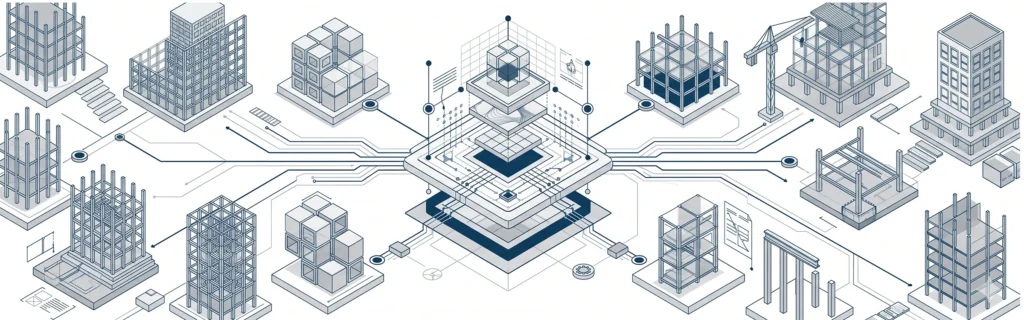
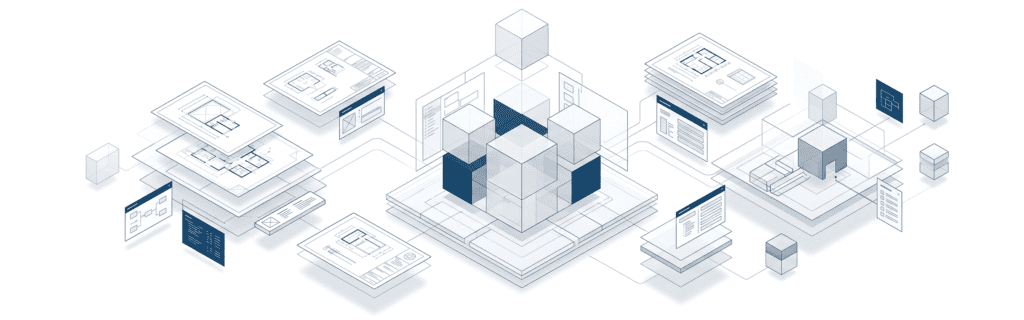
In simple terms, BIM coordination creates a unified model where design teams and construction teams can review how construction elements fit together. It doesn’t mean one person “owns” everything. It means the right project teams contribute their parts, and a BIM coordinator helps align them into an entire model that is consistent enough to build from.
What “coordination” really means day to day
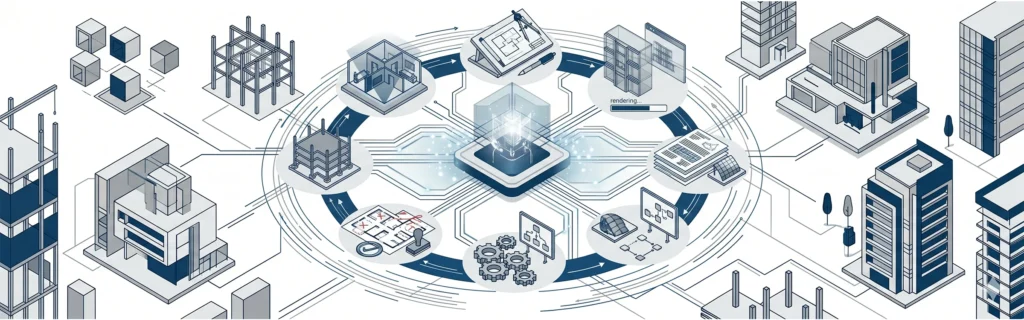
Day to day, coordination is communication plus checking. It’s regular file exchanges, model reviews, clear issue logs, and coordination meetings that keep team members moving in the same direction. Done well, it supports collaboration, reduces rework, and improves project efficiency across projects of all sizes.
What Is BIM Coordination Meaning
The BIM coordination meaning is broader than “finding clashes.” It’s a coordination process for managing shared model information across different disciplines, helping everyone make decisions using the same reference.
BIM coordination meaning in design and construction
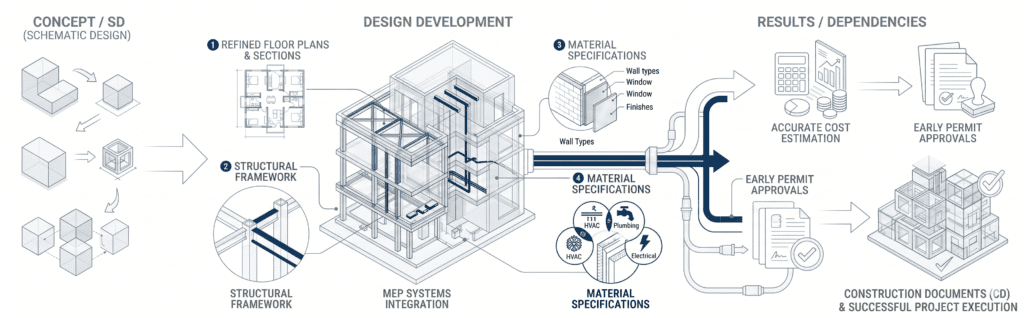
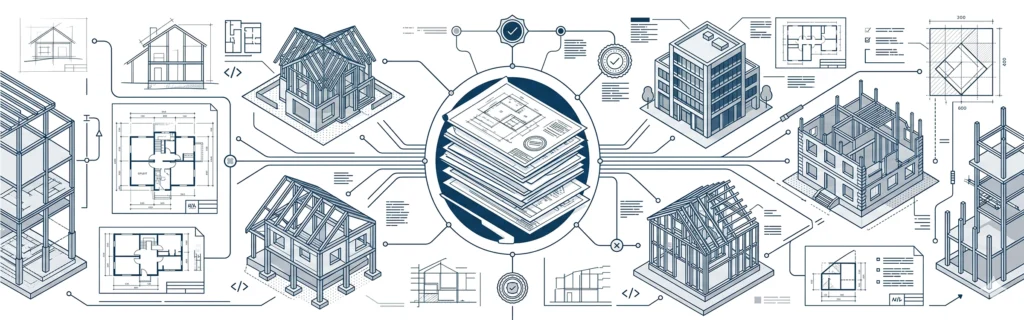
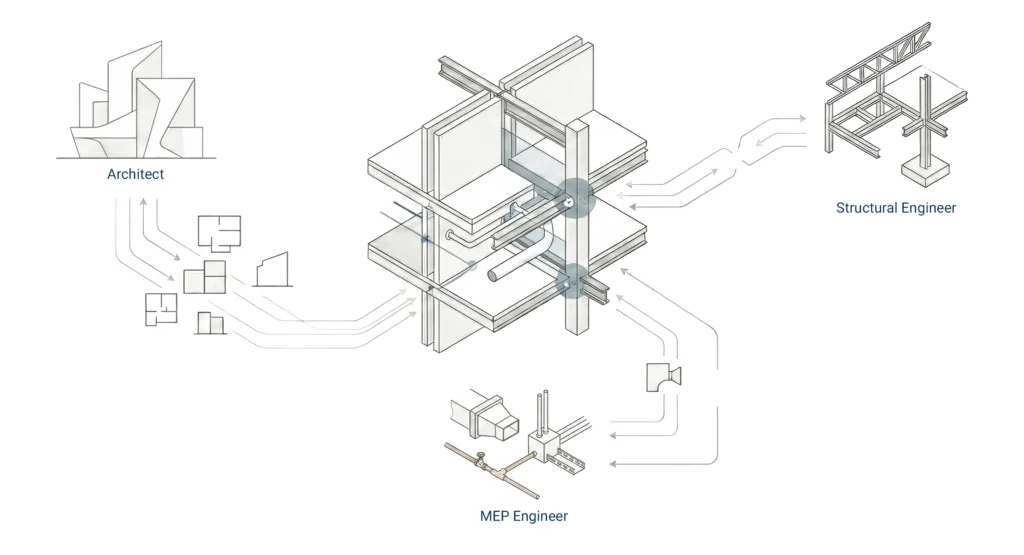
BIM coordination connects design and construction by keeping the modeling process consistent and by verifying that different systems (structure, HVAC, plumbing, electrical, fire protection) can coexist in real space. It’s most valuable during the design phase, but it continues as the construction process evolves-especially when conditions, suppliers, or contract type introduce changes.
What is BIM coordination in construction
What is BIM coordination in construction? It’s the workflow that aligns models, drawings, and install intent so that when construction begins, the field team isn’t forced to “solve design” on site. This is why many construction companies consider coordination an essential part of modern delivery.
What Is Building Information Modeling (BIM)
To understand what is BIM coordination, it helps to define BIM itself. Building information modeling is a way to create and manage digital building data-geometry plus information-so project teams can plan, design, and build with fewer unknowns.
Building information modeling basics
BIM is widely accepted in the construction industry because it supports clearer planning and fewer disconnects between disciplines. The model isn’t just a 3D picture; it’s information modeling that can include elements like sizes, clearances, locations, and metadata.
You can learn more in what Is BIM in construction and what Is BIM and why it matters in modern construction .
How BIM models support collaboration
When implemented correctly, BIM models create a collaborative environment where project stakeholders can review the same source of truth. That shared context is what makes BIM coordination possible and what makes future projects easier when standards and lessons learned are carried forward.
Key Goals of BIM Coordination
BIM coordination has a few key goals that show up on almost every construction project, regardless of delivery method.
Aligning different disciplines and systems
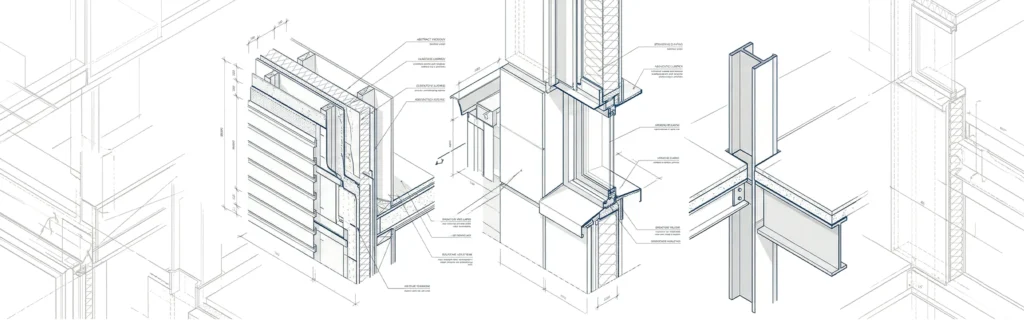
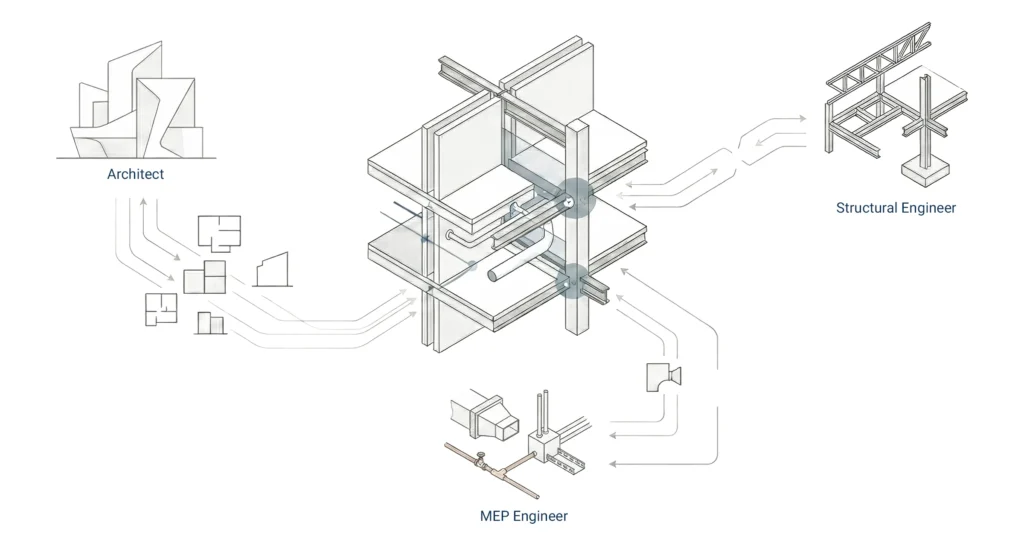
Most issues come from interfaces-where structure meets MEP, where architectural intent meets constructability, where different disciplines’ assumptions collide. BIM coordination helps project participants align those interfaces, especially when different systems compete for limited space.
Better information management and quality control
Coordination also supports information management: keeping naming, levels, grids, and model versions consistent, and ensuring changes are traceable. This improves quality control and makes it easier to identify what changed, when, and why.If you’re mapping how detail is defined over time, BIM LOD is a helpful companion topic.
Why Is BIM Coordination Important for a Construction Project
A construction project involves many moving parts and many parties. BIM coordination reduces risk by making conflicts visible early and by improving collaboration between project teams.
Prevent issues before construction begins
The biggest value is early identification-finding problems while they are still just model decisions. Early clash detection reduces on-site fixes and helps keep the schedule predictable. It also supports a smoother construction process because trade partners can plan with fewer last-minute surprises.
Support project stakeholders and project goals
BIM coordination supports project goals like safety, schedule, budget stability, and quality. It helps project stakeholders-owners, general contractor, designers, and key subs-make decisions with clearer context and fewer assumptions.
BIM Coordination Process Steps
While details vary by company, most projects follow a similar BIM coordination process.
Inputs: BIM execution plan, roles, and model standards
Coordination starts with a BIM execution plan that defines roles, file formats, coordination frequency, level of detail, naming rules, and how issues will be tracked. This is the foundation for successful BIM coordination because it sets expectations for project teams from the start.
Coordination meetings and issue tracking
Next comes the recurring rhythm:
- Models are shared on a schedule (weekly is common).
- The BIM coordinator combines them for review and creates the unified model view for checking.
- Coordination meetings (often with trade leads) review issues, assign owners, and set due dates.
This is where “effective BIM coordination” is mostly earned: clear communication, consistent follow-up, and a respectful process that keeps team members engaged.
Outputs: resolved conflicts and detailed documentation
The output is not just a screenshot of a clash. The output is documented decisions: updated models, agreed routing, approved clearances, and detailed documentation that supports fabrication and installation. Over time, this builds overall project efficiency by reducing repeated debates and preventing the same conflicts from reappearing.
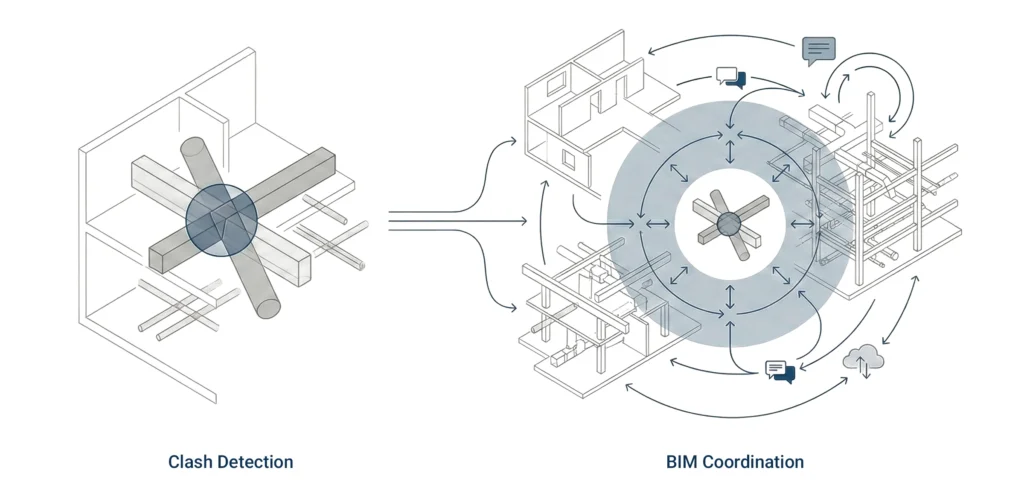
BIM Coordination vs Clash Detection
These terms are related, but they are not the same.
Clash detection as one essential part
Clash detection is the technical act of checking models to detect conflicts and identify clashes-hard clashes (two objects intersect), soft clashes (clearance problems), and workflow issues (access, maintenance space). It’s a key tool for early identification and early clash detection.
What “effective coordination” includes beyond clashes
BIM coordination includes clash detection, but also:
- Clarifying responsibilities between project participants
- Managing changes and versions
- Aligning “intent” (what should happen) with “means” (how it will be built)
- Supporting collaboration and decision-making across different disciplines
So, clash detection is necessary, but not sufficient for successful BIM coordination on real construction projects.
Common Software for BIM Coordination
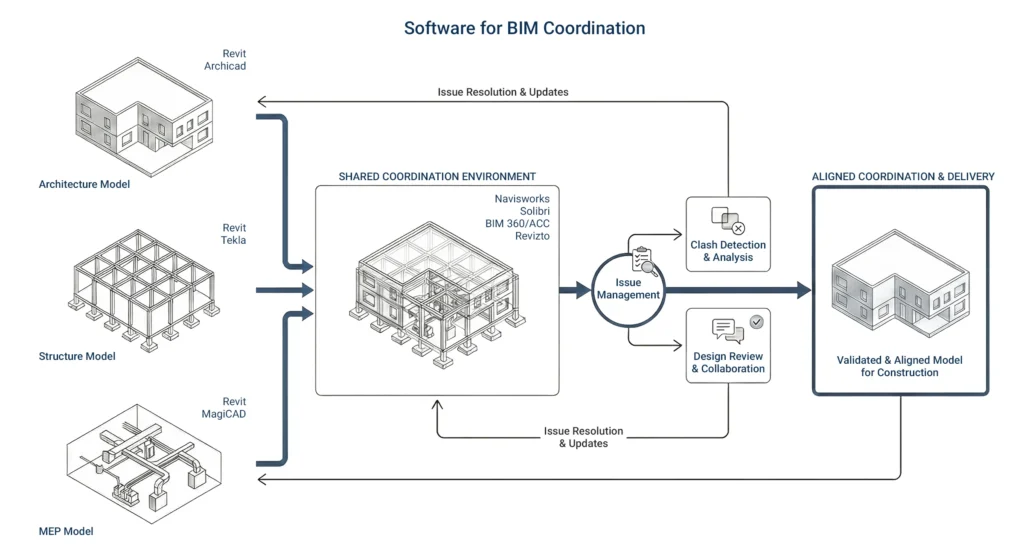
BIM coordination often uses a mix of tools: design software for authoring models and coordination software for combining, reviewing, and managing issues.
Authoring vs coordination tools
On many projects, architectural technology workflows rely on authoring tools like Autodesk Revit for creating discipline models. For aggregation and review, teams often use tools that can combine multiple BIM models, run clash detection, and support issue workflows.
Typical stack for project teams
Common BIM software choices depend on contract type, file standards, and client requirements, but a typical stack may include:
- Authoring: Revit (architecture/structure/MEP)
- Coordination: Navisworks Manage for model aggregation and clash detection
- Issue tracking and collaboration: platforms and viewers that support comments, markups, and approvals
What Does a BIM Coordinator Do
A BIM coordinator is the person (or role) responsible for running the coordination process and keeping the model ecosystem organized across projects. If you’re searching “what is a BIM coordinator,” this is the simplest definition: they coordinate the BIM models and the people behind them.
Core responsibilities across project participants
Typical responsibilities include:
- Setting up coordination standards from the BIM execution plan
- Managing model exchanges and version control
- Running clash detection and organizing issues
- Leading coordination meetings and documenting decisions
- Supporting design teams and construction teams with clear expectations
- Helping resolve conflicts across different disciplines and different systems
In short, what does a BIM coordinator do? They translate model information into coordinated actions so project teams can build with confidence.
Deliverables that support general contractor workflows
On many projects, the BIM coordinator works closely with the general contractor and key trades. A well-run process improves install planning, reduces rework, and helps general contractors benefit from fewer RFIs and better schedule reliability. It’s also a key role for keeping the construction process aligned with project goals.
What Are the Benefits of BIM Coordination
The benefits are practical and measurable, especially on complex construction projects.
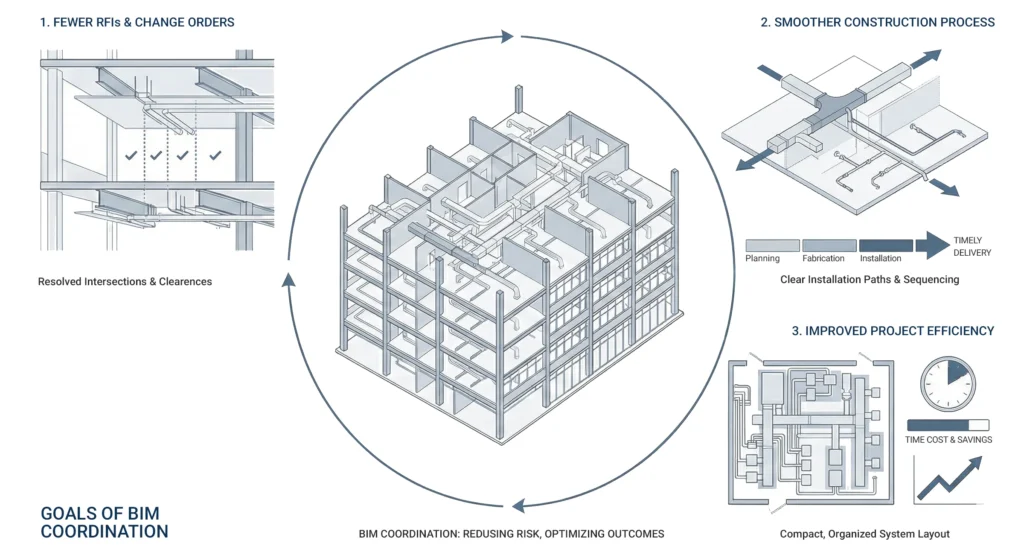
Fewer RFIs and change orders
When issues are detected early and decisions are documented, project teams spend less time reacting. That can reduce RFIs, late redesigns, and change orders driven by coordination gaps. It also supports quality control because problems are addressed before they become field conditions.
Smoother construction process and overall project efficiency
Good BIM coordination leads to a smoother construction process: fewer trade conflicts, clearer sequences, and better visibility into constraints. The result is better project efficiency and, on mature teams, improved overall project efficiency across multiple projects and future projects.
How to Learn BIM Coordination for Beginners
If you’re new, focus on skills that support effective coordination, not just software buttons.
Skills to build first
For beginners, learning BIM coordination usually means:
- Understanding how disciplines model (architecture, structure, MEP)
- Learning basic clash detection concepts (hard vs soft)
- Practicing issue tracking and clear communication
- Running consistent coordination meetings and writing clear notes
- Building comfort with BIM software used on real projects
It also helps to understand the broader BIM principles so you can explain decisions to non-modelers. If your interest leans toward architecture, what Is BIM in architecture can be useful.
Picking a college or training provider
Many people start through a college or training provider, online courses, or internal company training. Look for training that includes real coordination workflows: combined models, issue logs, and meeting simulations-not just isolated modeling tutorials. A strong training provider will also teach standards, naming conventions, and coordination process discipline.
BIM Coordinator Career Path
A BIM coordinator career path can start from several places: architecture, engineering, construction management, or trade coordination. What matters most is the ability to connect people, data, and buildability.
Entry points and growth to BIM management
Some start with an undergraduate degree in a related field. Others enter from the field side and build BIM skills through project work. In some regions, a higher national diploma can also be an entry credential, paired with strong software and coordination experience. Over time, coordinators may grow into BIM leads or BIM managers, taking on broader BIM management responsibilities like standards, templates, and multi-project governance.
How to become a BIM coordinator
If you’re asking how to become a BIM coordinator, a practical path looks like this:
- Learn BIM fundamentals and how BIM models are structured
- Get comfortable with authoring and review tools (Revit + coordination tools)
- Practice clash detection and issue workflows on sample models
- Join a team where you can support real coordination meetings
- Build a portfolio that shows you can detect conflicts, resolve conflicts, and document decisions clearly
For teams building internal capability, MastTeam can support BIM workflows as part of project delivery and coordination standards. If you need help scoping coordination support for your project teams, you can contact us.
FAQ
What is BIM coordination?
BIM coordination is the coordination process of aligning BIM models from different disciplines so conflicts are found early and construction can proceed with fewer surprises.
What is a BIM coordinator?
A BIM coordinator manages the BIM coordination process: model exchanges, clash detection, issue tracking, and coordination meetings with project participants.
Is BIM coordination the same as clash detection?
No. Clash detection is one part of BIM coordination. Coordination also includes decisions, documentation, version control, and collaboration across project teams.
What software is commonly used for BIM coordination?
Many teams use Autodesk Revit for authoring and Navisworks Manage for model aggregation and clash detection, plus tools for issue tracking and collaboration.
When should BIM coordination start?
Ideally in the design phase, so early identification happens before construction begins and changes are easier to implement correctly.
How to learn BIM coordination for beginners?
Start with BIM fundamentals, then practice combined-model reviews, issue logs, and meeting workflows. A college or training provider can help, especially with real project-style exercises.