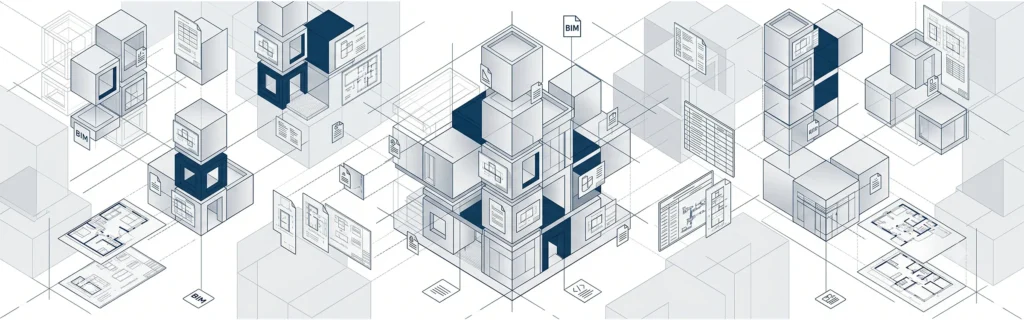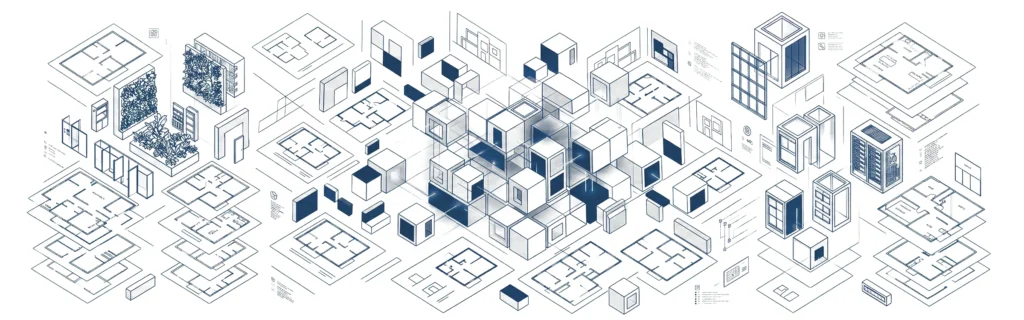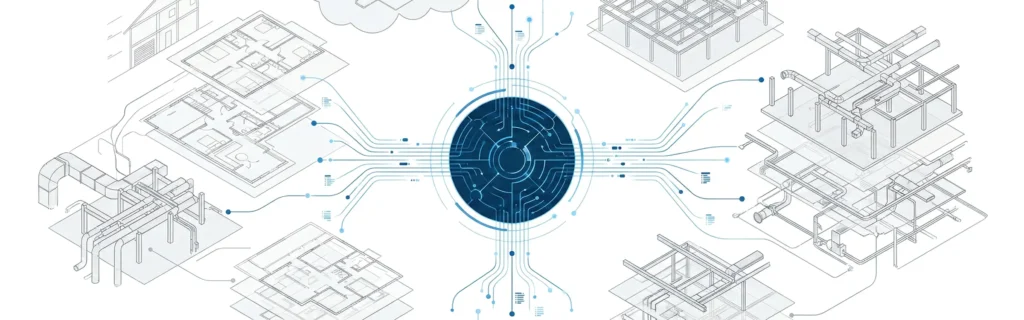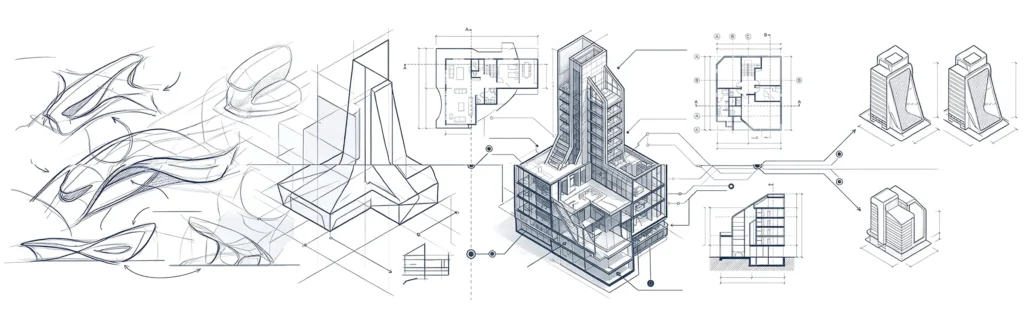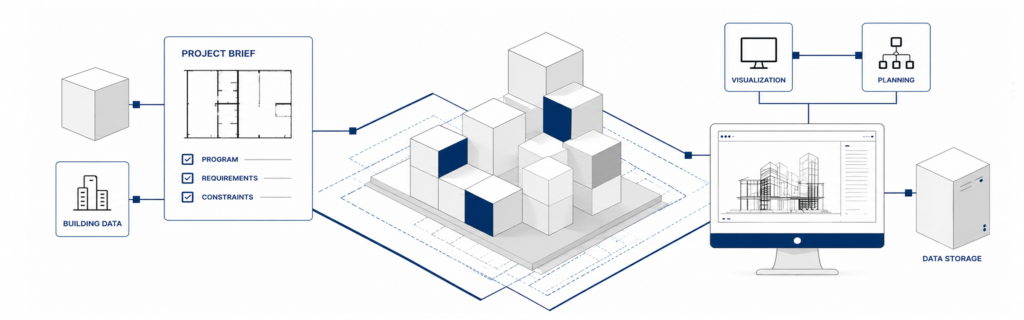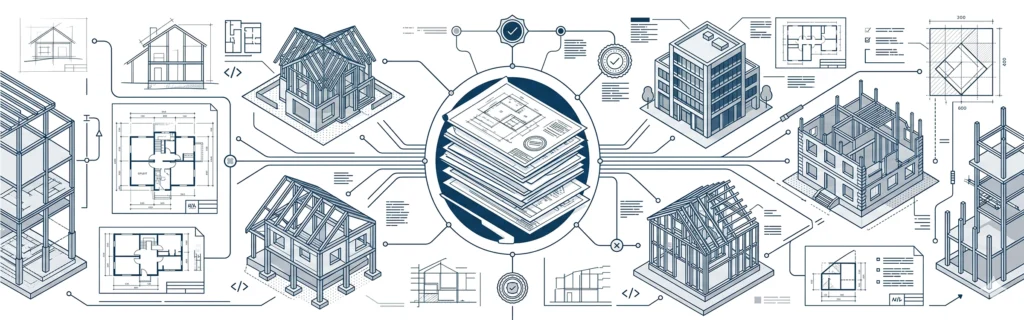
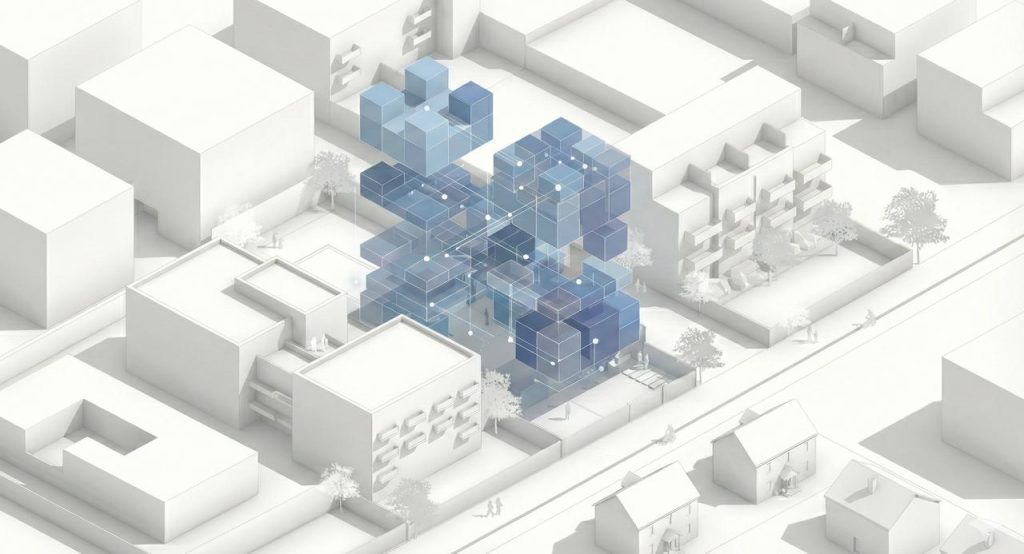

BIM in construction refers to the use of Building Information Modeling to plan, design, build, and manage construction projects using a shared digital environment. Instead of relying on isolated drawings, BIM introduces a coordinated digital representation of a built asset that integrates geometry, data, and processes across the entire construction lifecycle.
Within the construction industry, BIM has become a foundational approach that supports collaboration, improves construction management, and drives better project outcomes for all parties involved.
What Does BIM Mean in Construction
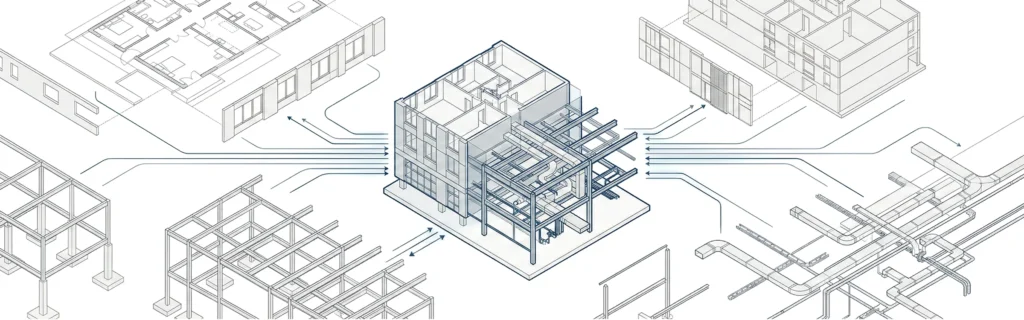
In the construction context, building information modeling describes a coordinated approach to organizing and using project information throughout the entire life cycle of a facility. Instead of treating data as static documentation, BIM links a building information model with structured workflows that connect the design process, engineering disciplines, construction activities, and operational needs.
By organizing information in this way, BIM becomes a shared knowledge resource that continuously evolves as a project moves forward. This allows construction professionals to rely on accurate, up-to-date information from early planning and design through construction and long-term building management.
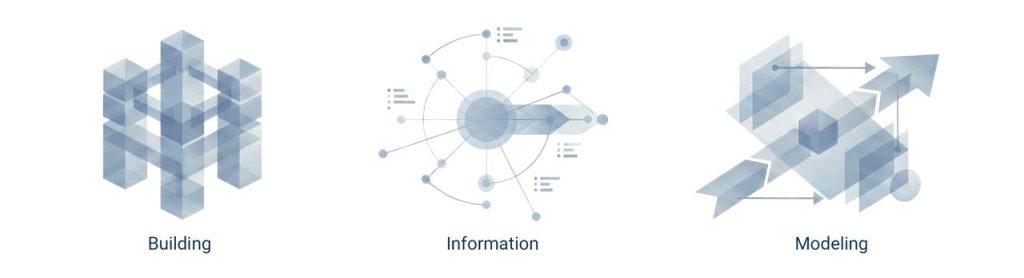
How BIM Works in Construction Projects
BIM functions by combining information modeling, digital tools, and collaborative workflows into a unified construction process. Project teams develop a digital model that captures not only geometry, but also the physical and functional characteristics of a building or infrastructure asset.
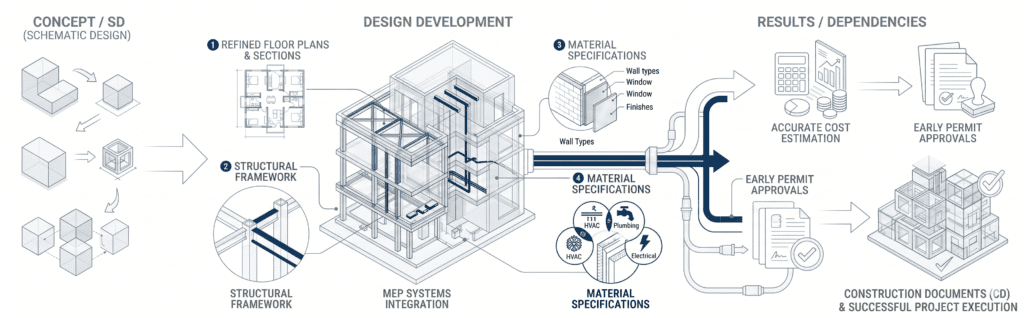
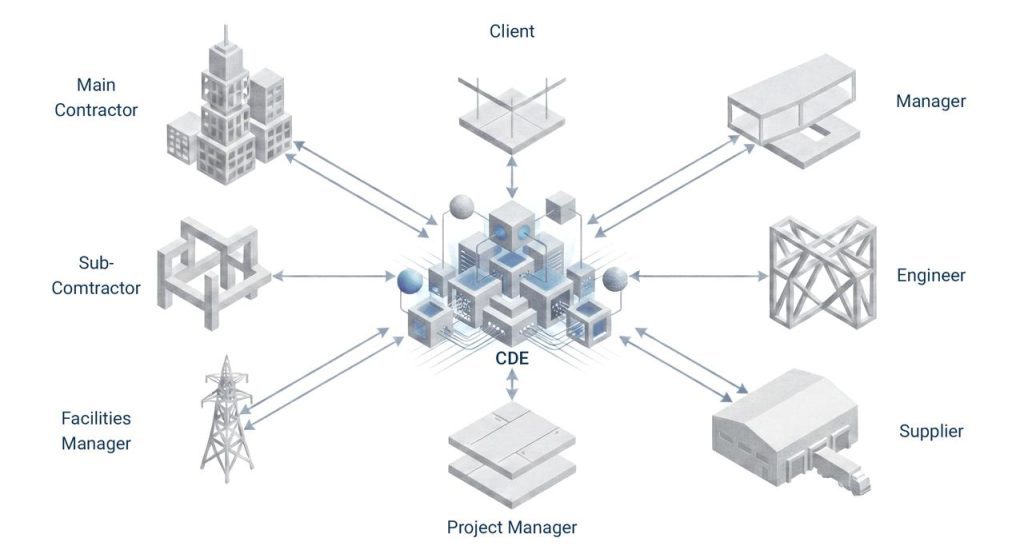
The model is established during the design phase and is progressively refined as construction begins. Through the use of a common data environment (CDE), design and construction teams can share coordinated BIM data, monitor construction progress, and manage updates efficiently across multiple construction sites.
BIM Across Project Stages
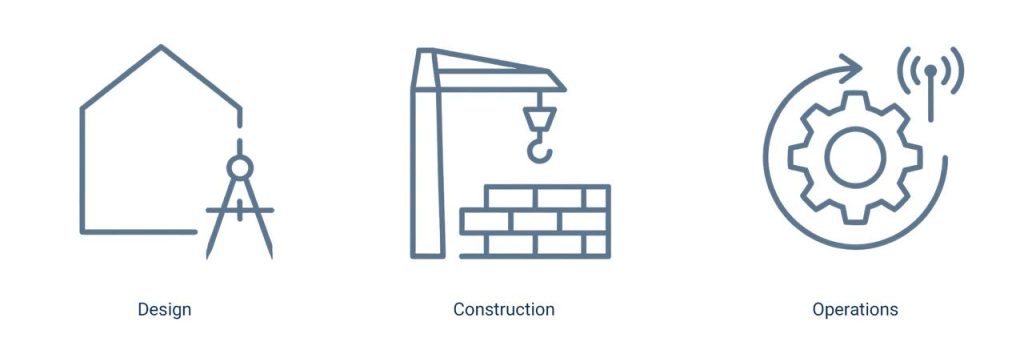
BIM supports the entire construction process, including:
- Design phase – coordination between the design team, architects, civil engineers, and structural engineers
- Pre-construction – construction planning, cost analysis, and risk reduction
- Construction stage – progress tracking, coordination between construction teams, and jobsite safety improvements
- Operations – facility management, asset management, and support operations
This continuity helps construction companies maintain alignment between design and construction intent.
Why Is BIM Important in Construction
BIM has become essential because construction projects are increasingly complex. In the construction sector, BIM enables better coordination, improved efficiency, and reduced risks.
By supporting project management and construction management, BIM allows project managers to make informed decisions based on reliable data. Many construction firms rely on BIM to achieve better project outcomes, especially on large AEC projects and public sector projects.
For many construction companies, successful BIM adoption depends not only on digital tools, but also on practical experience with real construction workflows. This is why many organizations rely on BIM modeling services for construction projects to ensure data accuracy, coordination between teams, and consistent project delivery.
Benefits of BIM in Construction
BIM delivers practical benefits throughout the construction lifecycle.
Improved Collaboration and Communication
BIM connects project teams through a shared digital platform, ensuring that all parties involved work from the same information.
Clash Detection and Risk Reduction
By identifying conflicts between building systems early, BIM reduces rework and delays during construction.
Cost Estimation and Budget Control
Linking BIM data with schedules enables accurate cost analysis and better control of project costs.
Time Scheduling and Construction Planning
BIM supports construction planning by visualizing sequencing and tracking construction progress in real time.
BIM Dimensions Explained
BIM dimensions expand the value of the model beyond geometry.
3D BIM – Design and Visualization
3D BIM provides a detailed 3D model that improves spatial relationships and design coordination.
4D BIM – Time and Scheduling
4D BIM links the model to schedules, supporting construction progress tracking.
5D BIM – Cost Management
5D BIM integrates cost data to support budgeting and financial control.
6D BIM – Sustainability
This dimension supports analysis of energy consumption and performance.
7D BIM – Facility Management
7D BIM supports facilities managers in maintaining and operating the built asset throughout the building’s lifecycle.
How BIM Is Used in the Construction Industry
BIM is used differently depending on the role within a construction project.
BIM for Architects and Engineers
Architects, civil engineers, and structural engineers use BIM to develop coordinated designs and ensure alignment with construction intent.
BIM for Contractors and Builders
Construction teams rely on construction BIM to manage construction methods, site coordination, and supply chain planning.
BIM for Owners and Developers
Project owners and building owners use BIM to monitor project outcomes and support long-term building management.
BIM Software and Tools Commonly Used
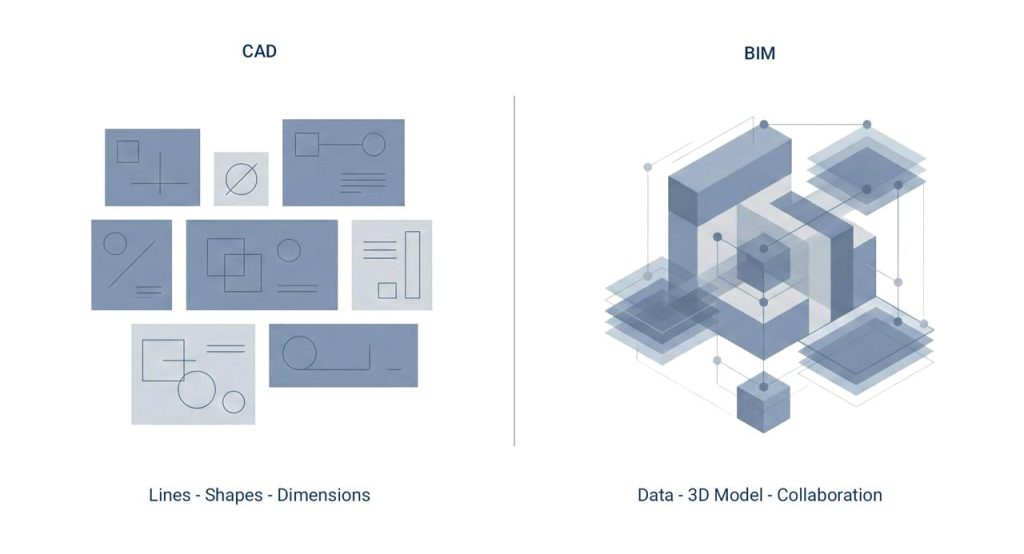
BIM software supports different aspects of the BIM process, including modeling, coordination, and construction management. While rooted in computer aided design, modern BIM tools go beyond traditional CAD approaches by integrating data, workflows, and cloud computing.
Many BIM environments also support mobile devices, enabling access to project information directly on construction sites.
Challenges of BIM Implementation
Despite its advantages, implementing BIM presents challenges such as training requirements, changes to construction processes, and upfront investment. Successful BIM adoption requires clear strategies, defined roles for project managers, and commitment from all parties involved.
The Role of BIM in Digital Transformation
BIM plays a key role in the digital transformation of the AEC industry. By integrating BIM data with digital tools such as virtual reality and cloud platforms, construction companies can improve decision-making and jobsite safety while enhancing collaboration across the BIM ecosystem.
How BIM Outsourcing Supports Construction Companies
Many construction companies choose to outsource BIM services to access specialized expertise, scale project teams, and improve efficiency. Outsourcing helps construction firms manage complex AEC projects without expanding internal resources while still achieving better project outcomes.
What is BIM in construction used for?
BIM in construction is used to plan, design, coordinate, and manage construction projects through a shared digital environment. It supports construction planning, improves coordination between project teams, and helps track construction progress across all project stages.
What does BIM stand for in construction?
BIM stands for Building Information Modeling. In the construction industry, building information modeling refers to both a digital building information model and the BIM process used to manage project information throughout the entire life cycle of a built asset.
How does BIM support construction project management?
BIM supports construction project management by centralizing project information in a coordinated digital environment. Project managers can rely on BIM data to align design and construction teams, track schedules, manage budgets, and respond to changes more efficiently, which leads to improved project outcomes across the entire construction process.
What is the difference between BIM and traditional CAD approaches?
Traditional CAD approaches are primarily focused on producing drawings and basic geometry. BIM expands on this by creating a comprehensive digital representation that incorporates spatial relationships, functional characteristics, and construction intent. This allows construction professionals to manage workflows, coordination, and decision-making across the entire construction lifecycle rather than working with isolated documents.
Is BIM only a 3D model?
No. Although a 3D model is an important component, BIM also includes structured information related to time, cost, sustainability, and facility management. A building information model continues to develop over time and supports informed decision-making from early design through construction and ongoing operations.
Who uses BIM on construction projects?
BIM is used by architects, civil engineers, structural engineers, MEP engineers, construction professionals, project managers, and facilities managers. Project owners and building owners also rely on BIM to understand project performance and manage the built environment more efficiently.
When should BIM be implemented in a construction project?
BIM should be implemented as early as possible, ideally during the design phase. Early implementation allows design and construction teams to align design and construction intent before construction begins, reducing risks and costly changes later.
What role does a common data environment play in BIM?
A common data environment (CDE) ensures that all parties involved have access to the same coordinated BIM data. This improves collaboration, reduces errors, and supports transparent decision-making across construction sites and project teams.
Can BIM be used for existing buildings?
Yes, BIM can be applied to existing buildings using as-built data and digital models. This supports renovation projects, asset management, facility management, and long-term building management.
How does BIM improve jobsite safety?
By visualizing construction stages and identifying potential conflicts in advance, BIM helps construction teams plan safer workflows. This reduces on-site risks and supports better jobsite safety practices.
Is BIM required for public sector projects?
In many regions, public sector projects increasingly require BIM to improve transparency, efficiency, and lifecycle management. Standards and guidelines are often aligned with national institute recommendations.
Can BIM services be outsourced?
Yes. Many construction firms choose outsourcing BIM modeling to scale resources, access specialized expertise, and support complex construction projects without increasing internal teams or operational costs.
How does BIM support facility management after construction?
After handover, BIM supports facility management by providing facilities managers with access to accurate information about building systems, maintenance requirements, and energy consumption throughout the building’s lifecycle.
Does BIM replace construction professionals?
No. BIM does not replace construction professionals. Instead, BIM enables teams to work more efficiently by improving coordination, communication, and access to relevant information.
Why is BIM important for the future of the construction industry?
BIM enables digital transformation by integrating digital tools, cloud computing, and advanced data workflows. This helps the construction industry deliver better project outcomes, improve sustainability, and manage increasingly complex projects.