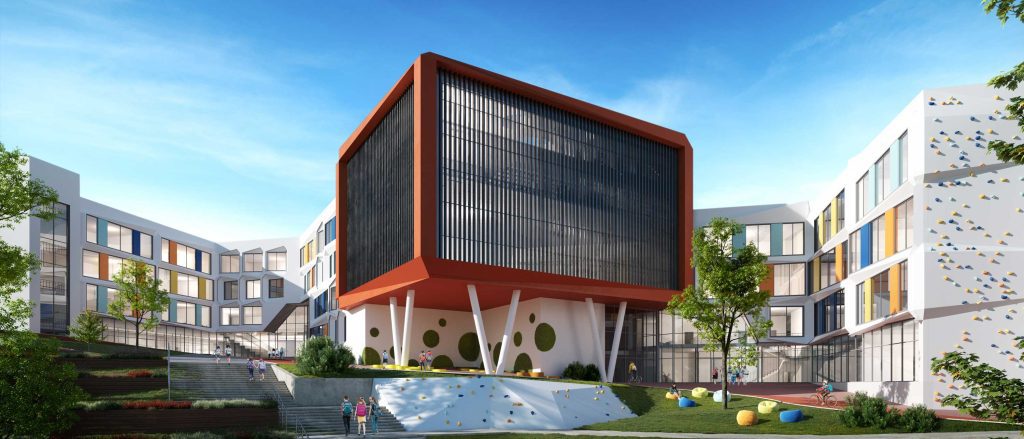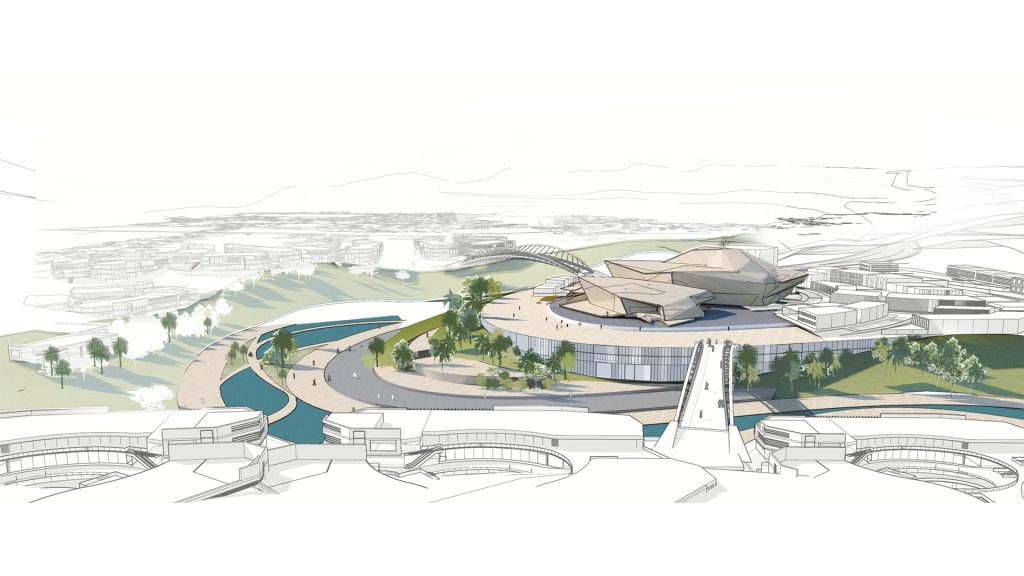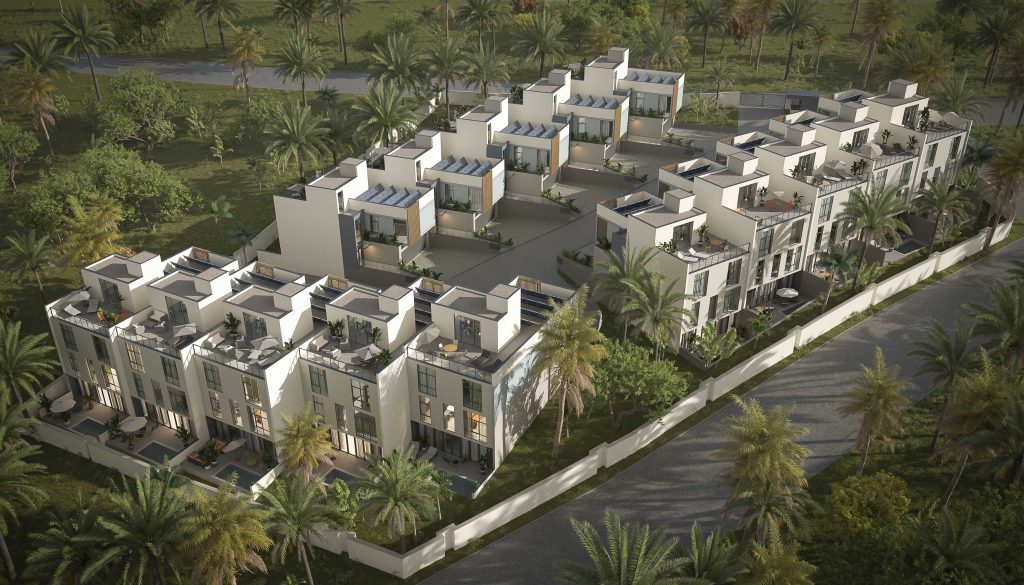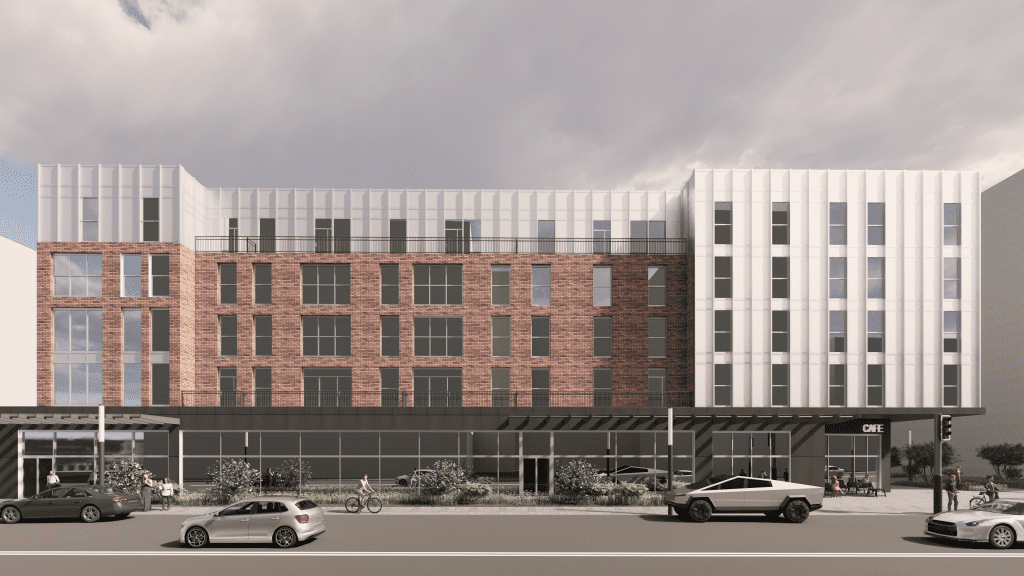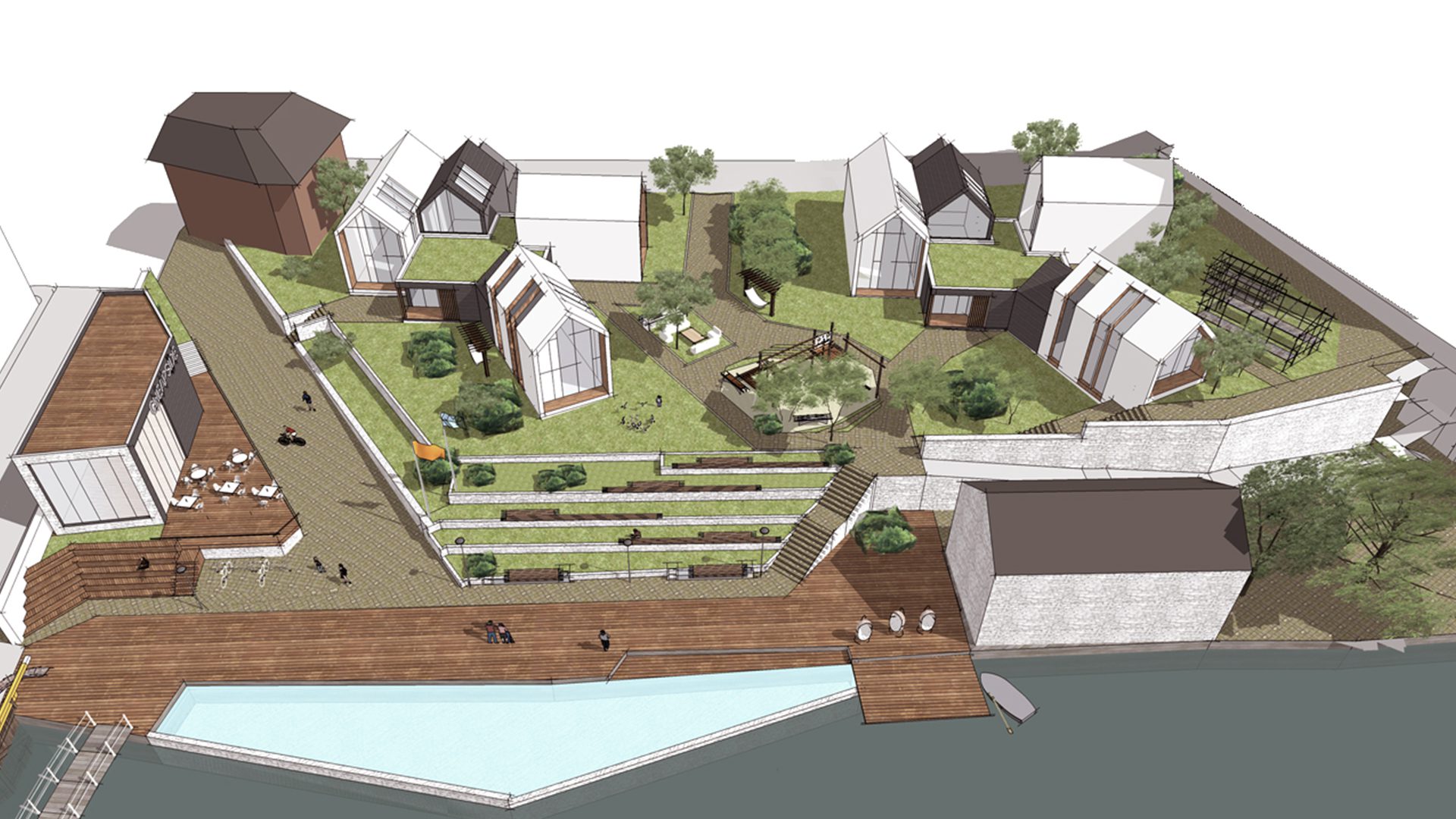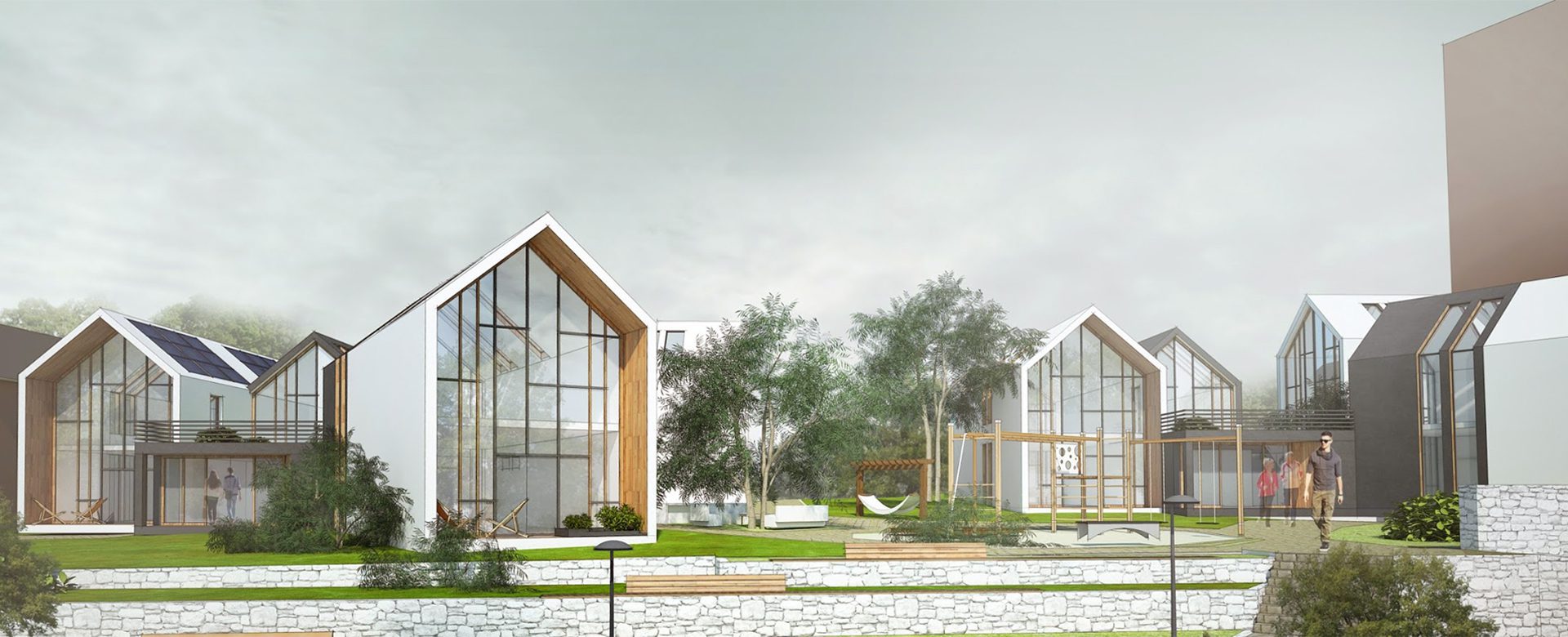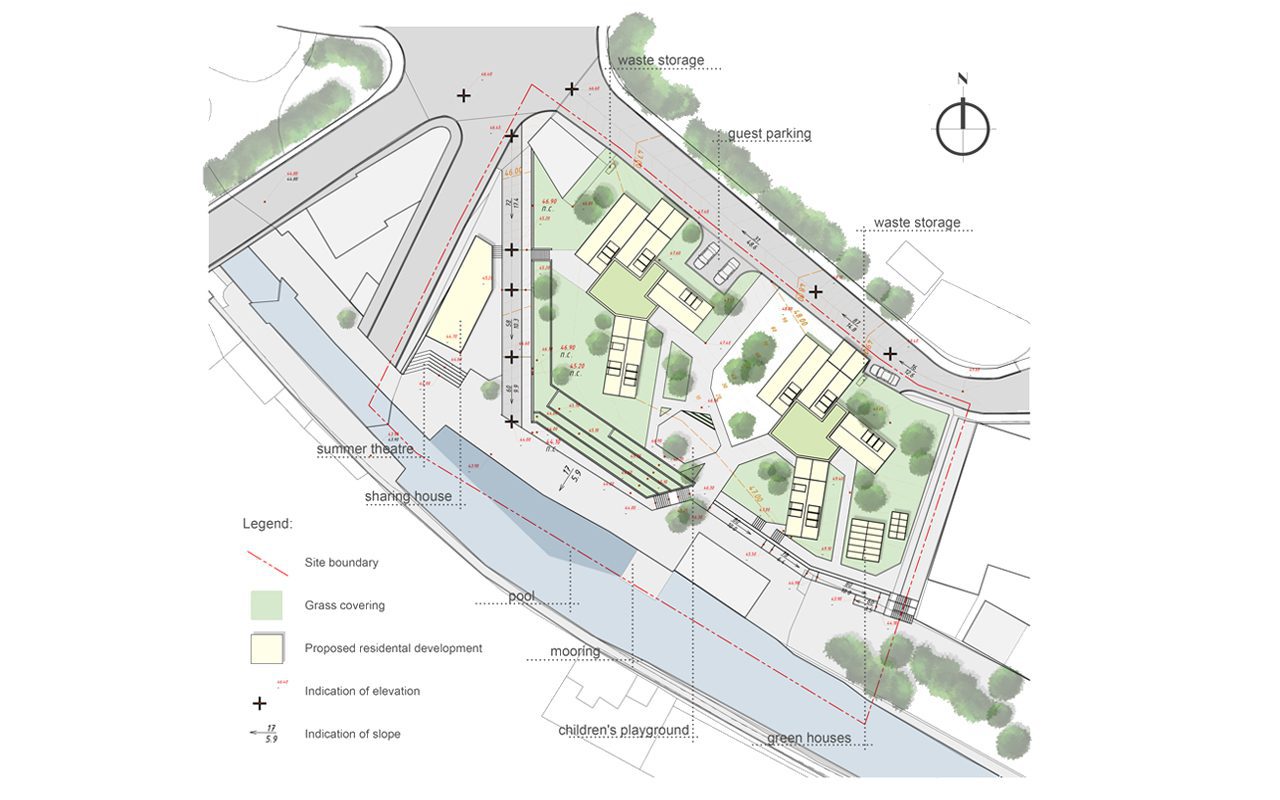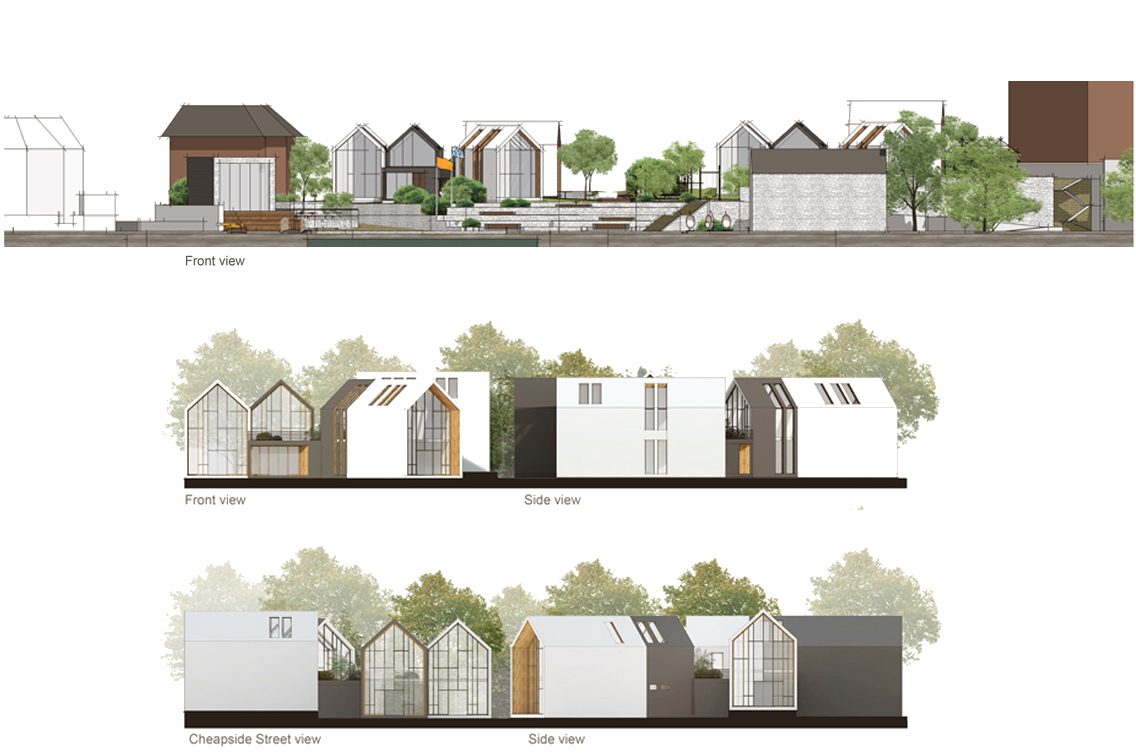
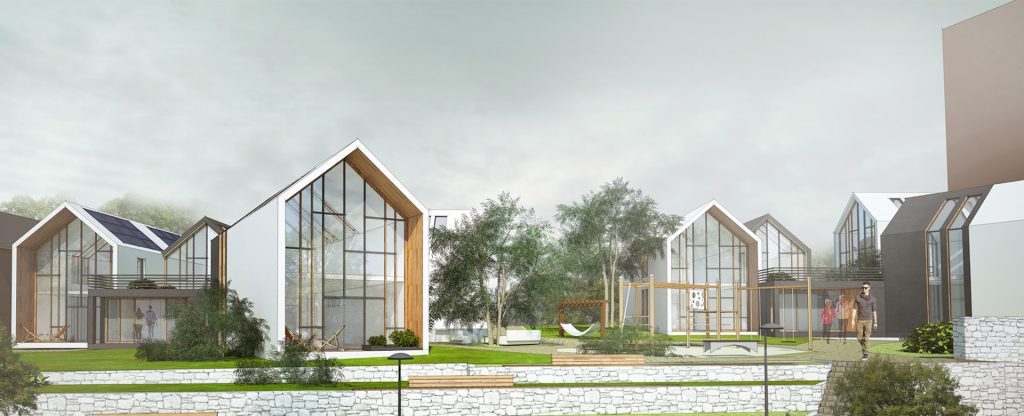
The new residential quarter south of Stroud’s historic center is being developed within a free yet isolated area – bordered by railway tracks and large parking lots on one side, and by the canal on the other. The project aims to overcome existing physical and visual barriers: bridging across the railway, negotiating the challenging topography, and reconnecting the town’s core with its green and waterfront areas.
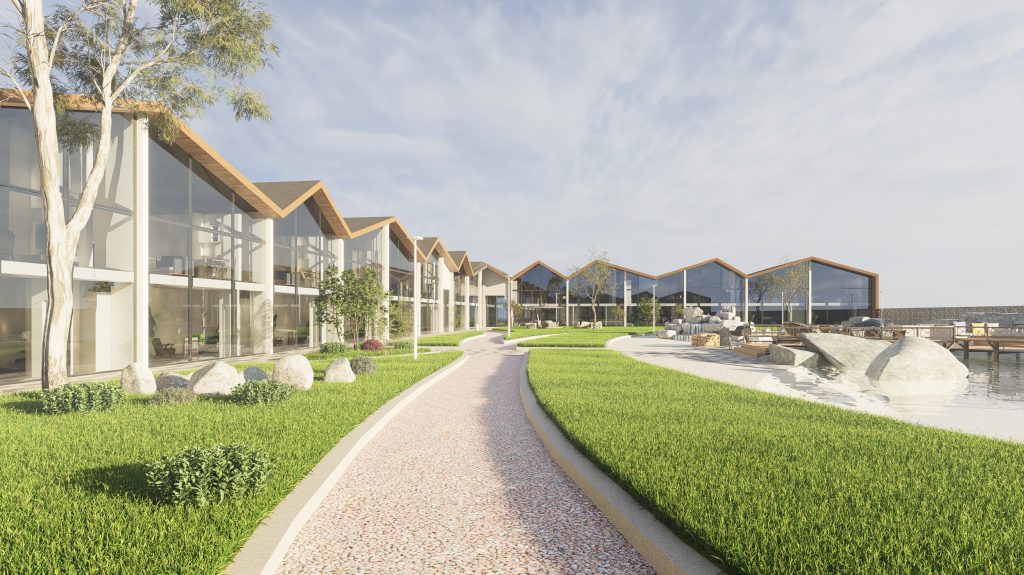
The development is conceived as an urban structure within a compact, constrained site – a small community with its own internal infrastructure that simultaneously functions as a public transit route for town residents, opening new access to the waterfront.
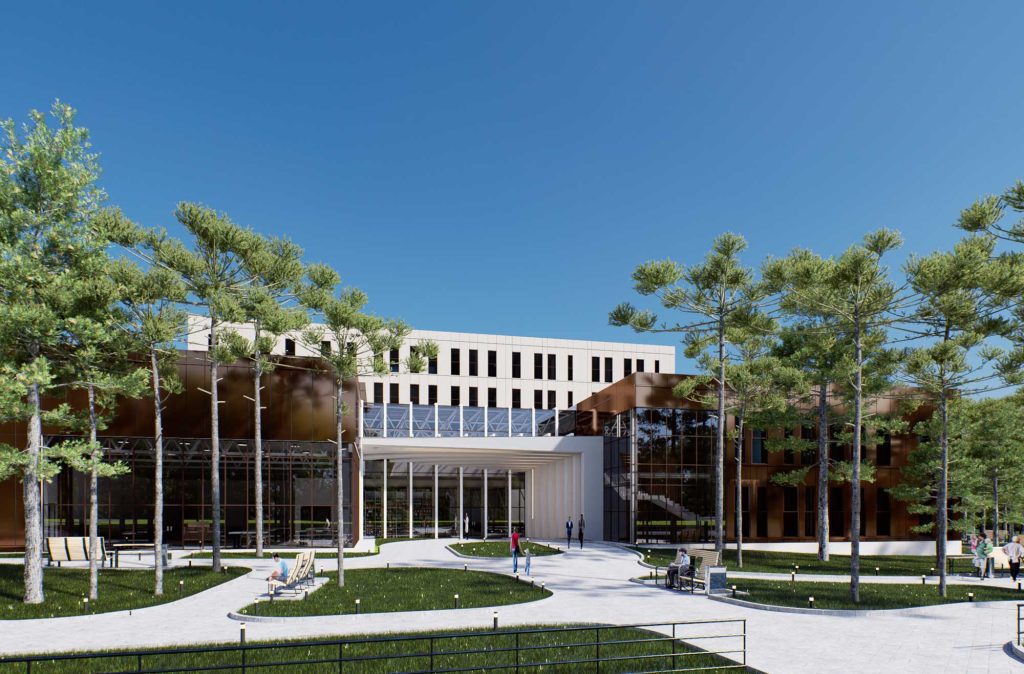
Stroud has a long-standing tradition of artistic culture, independent spirit, and café life. Therefore, another key aspect of the project is the creation of a social framework within a small area – providing all necessary infrastructure for a high quality of life and supporting the growth of the community as an independent yet open cultural unit.
The emerging cluster is a multifunctional community that brings together people from diverse fields. The residential blocks follow a principle of vertical and horizontal clustering, incorporating both shared and private spaces. This approach encourages strong neighborly relations and environmentally responsible shared areas.
The site’s central transit zone acts as an activator – enhancing interaction between the new development’s residents and the wider community. New pedestrian streets and bridges across the canal will open fresh opportunities for using the waterfront as an inclusive recreational space accessible to all groups, including cyclists and people with limited mobility.